


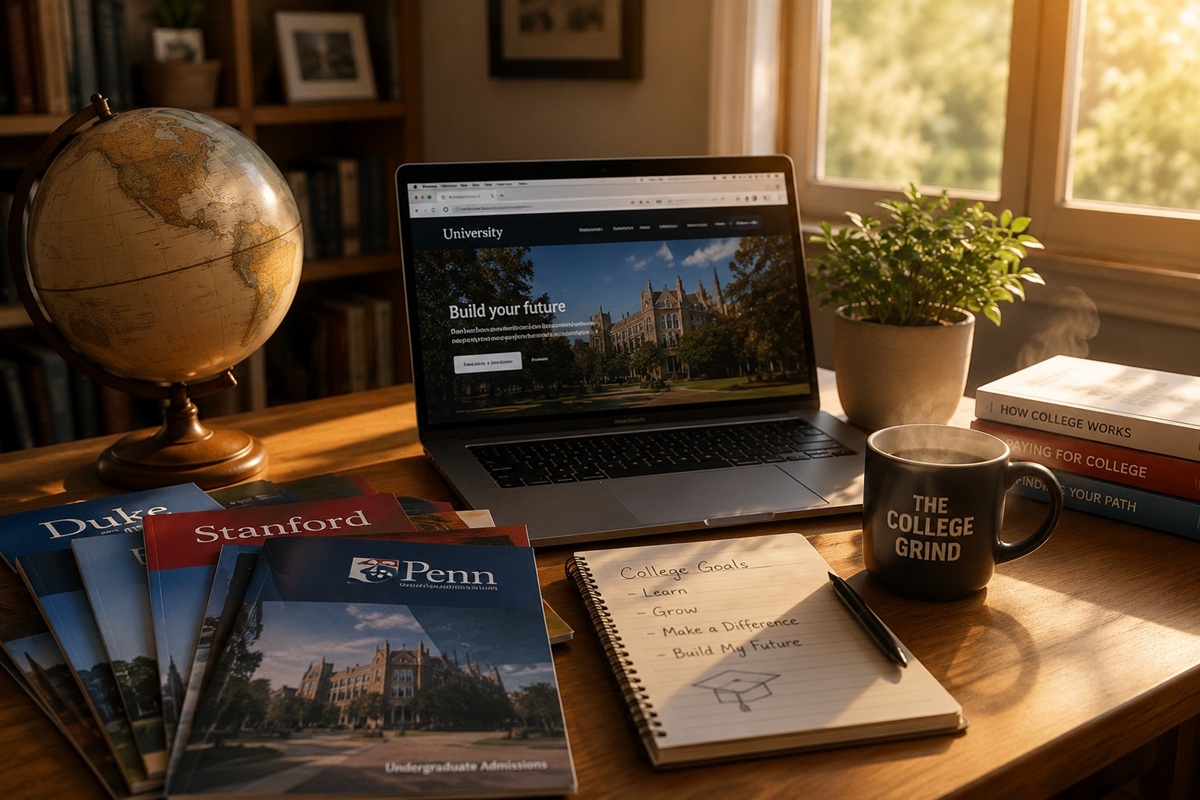
Applying to college can feel like navigating a foreign landscape. For homeschooled high school students and their families, the process often brings a unique set of questions. Most college admissions advice is written for students attending traditional public or private high schools. Homeschooled students, however, have very different academic experiences, daily schedules, extracurricular opportunities, and challenges.
Colleges across the United States welcome homeschooled applicants. To stand out in a competitive applicant pool, homeschooled students must learn how to translate their non-traditional education into a format that admissions officers understand and trust.
How Admissions Offices Evaluate Homeschooled Applicants
Admissions offices evaluate homeschooled students using a framework called holistic review. This means that admissions officers do not look at a single test score or grade in isolation. Instead, they review the entire application within the context of the student’s unique learning environment, family situation, geographic location, and available resources.
Most colleges do not maintain separate, more difficult admissions policies for homeschooled students. However, because traditional metrics like a standardized school curriculum or a class rank are missing, colleges must look for other forms of academic evidence.
Many major universities employ specialized admissions readers or regional admissions officers who are trained to evaluate non-traditional applications. Some institutions even have designated staff members to assist homeschoolers, such as the Homeschool Coordinator at the California Institute of Technology (Caltech).
When evaluating these applications, admissions officers look for specific qualities:
- Initiative: Admissions officers love to see a student who takes the initiative to design independent projects, conduct deep research, or create new learning opportunities.
- Academic Rigor: Colleges need to see that the student challenged themselves with advanced coursework relative to what was available.
- Socialization and Collaboration: Admissions teams look for evidence that the student can work well with others, participate in group discussions, and function in a diverse campus community.
While admissions officers appreciate the depth of interest and self-direction that homeschooled students show, they also have common concerns. The biggest concern is “mommy grades”—grades given by a parent that may not reflect a student’s actual academic ability. Admissions officers also worry about grade inflation, a lack of external academic benchmarks, and educational isolation. To build trust, homeschooled families must provide objective evidence to back up parent-issued grades.
The Homeschool Transcript and School Profile
The high school transcript is the single most important document in a college application. It serves as a roadmap of the student’s academic path. While traditional schools have a registrar to handle this paperwork, homeschooled parents must act as the school administrator and create their own professional-looking transcript.
A strong homeschool transcript must be clean, structured, and easy to read. Admissions officers review thousands of applications, and a messy or confusing transcript can hurt a student’s chances.
A standard homeschool transcript should include:
- The student’s full legal name, date of birth, and home address.
- The name of the homeschool (if applicable) and a physical signature from the homeschool administrator (usually a parent) with the date.
- Course titles organized chronologically by academic year and grade level (grades 9 through 12).
- Standard credit values calculated using the Carnegie Unit system, where 1.0 credit represents a full-year course (120 to 180 hours of study) and 0.5 credit represents a semester course (60 to 90 hours).
- Final letter grades and an explicit grading scale key explaining the numerical ranges for each letter grade.
- Cumulative Grade Point Average (GPA), reporting both unweighted and weighted averages.
- The student’s official graduation date.
Unweighted versus Weighted GPA
An unweighted GPA calculates the average grade on a flat 4.0 scale, treating every class equally regardless of difficulty. A weighted GPA takes course difficulty into account, adding extra “quality points” for Honors, Advanced Placement (AP), or Dual Enrollment (DE) courses.
While a weighted GPA can showcase academic rigor, unaccredited homeschool programs should weight grades conservatively. Adding excessive weight to parent-taught courses without external validation can look like grade inflation to an admissions committee.
| Letter Grade | Percentage Range | Unweighted Quality Points (4.0 Scale) | Honors Course Bump (+0.5) | AP / Dual Enrollment Bump (+1.0) |
|---|---|---|---|---|
| A / A+ | 90–100 | 4.0 | 4.5 | 5.0 |
| B | 80–89 | 3.0 | 3.5 | 4.0 |
| C | 70–79 | 2.0 | 2.5 | 3.0 |
| D | 60–69 | 1.0 | 1.5 | 2.0 |
| F | 0–59 | 0.0 | 0.0 | 0.0 |
Table 1: Standardized GPA and Course Weighting Conversions
The School Profile
Along with the transcript, colleges expect a “School Profile”. This is a one- to two-page document that explains the context of the student’s education. It is about the school, not the individual student. A high-quality homeschool school profile should cover:
- Homeschool History and Philosophy: A brief overview of why the family chose homeschooling and the educational approach used (such as classical, interest-driven, or project-based learning).
- Grading Policies: An explanation of how grades were calculated, how credits were awarded, and the policy regarding weighted grades.
- Curriculum and Educational Partners: A list of any online platforms, local co-ops, tutors, or community colleges that provided instruction.
- Graduation Requirements: The total number of credits required to graduate from the homeschool, broken down by subject area.
Detailed Course Descriptions
Highly selective colleges often require a detailed course description document to understand the depth of a homeschooler’s studies. This document can run from 10 to 20 pages long. For every course listed on the transcript, the family should write a brief paragraph (50 to 80 words) covering:
- The course title, instructor, and number of credits earned.
- A summary of the topics covered.
- A list of the textbooks, literature, and online resources used.
- The methods used to grade the student (such as exams, essays, lab reports, or projects).
For example, a course description for an English class might detail the specific novels read and the length of the research papers completed. A science class description must explain whether hands-on laboratories were conducted at home, in a co-op, or at a local college.
The Counselor Recommendation and the Parent Dual Role
On the Common Application, a parent must fill out the School Report as the school counselor. This dual role can be difficult, as the parent must separate their perspective as a loving mom or dad from their role as an objective school official.
The Counselor Recommendation Letter is one of the most misunderstood parts of the homeschool application. Admissions officers read these letters to understand the student’s personal growth, motivation, and character.
The letter should avoid generic praise like “hardworking” or “nice”. Instead, parent-counselors can use a structured approach to highlight specific traits:
- Point: State the student’s key strength or standout intellectual trait.
- Reason: Explain why this trait matters in a college or real-world setting.
- Example: Tell a specific, personal story that shows this strength in action.
- Point (Restate): Bring the story back to the opening recommendation.
Parent-counselors should write a letter that is one to two pages long, using simple formatting and bullet points if needed to ensure readability. The letter must explicitly state that the writer is both the parent and the homeschool counselor, ensuring complete transparency with the admissions committee.
External Validation and Standardized Testing
To combat skepticism about “mommy grades,” homeschooled students need external validation—proof from a trusted third party that they have mastered high school material. Standardized testing is one of the most common and powerful ways to provide this proof.
Standardized tests like the SAT and ACT provide a universal benchmark. Admissions officers use these scores to compare a homeschooled student’s academic preparation directly against students from traditional public and private schools.
While many colleges adopted test-optional policies in recent years, these policies can affect homeschoolers differently. Some test-optional universities still require or strongly recommend standardized test scores specifically from homeschooled applicants to calibrate their GPA.
Furthermore, several top-tier universities, such as Princeton, MIT, Dartmouth, and the University of Texas at Austin, have fully returned to requiring standardized test scores for all applicants. For a competitive homeschooled student, a strong SAT or ACT score is a valuable asset that can confirm the academic validity of their high school transcript.
Beyond the SAT and ACT, students can use other standardized exams to demonstrate subject-specific mastery:
- AP Exams: Earning a 4 or 5 on an Advanced Placement exam provides objective, national proof of college-level mastery in a specific subject.
- CLEP Exams: College Board’s College-Level Examination Program (CLEP) allows students to earn transferable college credit by demonstrating knowledge gained through independent study.
Dual Enrollment and Community College Pathways
Dual enrollment is a program that allows high school students to take college-level courses and earn both high school and college credit at the same time. For homeschoolers, dual enrollment is an incredibly effective admissions tool.
By taking classes at a local community college or an accredited online university, students generate an official, third-party transcript. Earning strong grades in these classes signals to admissions officers that the student can succeed in a real college classroom, manage college-level coursework, and meet the deadlines set by professional professors.
Several states offer highly supportive programs for homeschooled dual enrollment. For example, Florida’s Dual Enrollment Program allows homeschooled students to take courses at local community colleges completely free of charge.
When integrating dual enrollment courses into the homeschool transcript, families must list the exact course title used by the college, note where the course was completed, and apply a consistent credit conversion. In most cases, a single-semester college course worth 3 to 5 credits converts to 1.0 full credit on the high school transcript.
| College Course Type | College Credits | High School Credit Equivalent | Sourcing and Reporting Guidelines |
|---|---|---|---|
| Standard Lecture Course (e.g., English Composition) | 3 | 1.0 Credit | List the college’s exact course title and code on the homeschool transcript. |
| Laboratory Science Course (e.g., General Chemistry with Lab) | 4–5 | 1.0 Credit | Explicitly note the lab component on the transcript; have the college send an official transcript directly to the admissions office. |
| Accelerated or Short-Term Course | 3 | 0.5 to 1.0 Credit | Record the credit based on the homeschool’s pre-established written grading policy. |
Table 2: Dual Enrollment to High School Credit Conversions
The Transfer Pathway Option
For some homeschooled students, starting college full-time at a community college is a highly strategic pathway. Community colleges have open-door admissions, lower tuition costs, and smaller class sizes that can make the transition from home education easier.
Many states have “articulation agreements” between community colleges and in-state public universities. These agreements guarantee that a student who completes their Associate Degree or a set number of general education credits will be admitted directly to a four-year state university as a junior.
Once a homeschooled student completes 30 or more college credits with a strong GPA, four-year admissions offices will evaluate them based on their college record rather than their high school homeschool transcript. This pathway can make highly selective universities much more accessible.
Demonstrating Academic Rigor Without AP Courses
Many homeschooled students worry that they cannot show “academic rigor” because they do not have access to a traditional high school’s catalog of AP courses. However, colleges do not expect students to take courses that were not available to them. Homeschoolers have several alternative ways to show they have challenged themselves academically:
- Self-Studying for AP Exams: Homeschooled students can study for AP exams independently using textbooks or online platforms, and then register to take the exams at a local high school. Earning a high score on the exam validates the academic rigor of their independent study.
- Online Course Providers: Students can take rigorous courses through established online schools, such as Stanford Online High School, or complete online classes through university extension programs.
- Independent Research Projects: A student can design and execute a deep, multi-month research project in a subject they love, producing a final paper, software program, or laboratory portfolio.
- Caltech’s substitution pathways: Caltech requires four years of high school math (including calculus), one year of physics, and one year of chemistry. If a homeschooled student cannot access these courses, Caltech officially allows them to demonstrate mastery by earning a score of 5 on corresponding AP exams, a score of 6 or 7 on IB exams, or by earning a free online certification challenge through Schoolhouse.world.
Finding Opportunities Outside Traditional Schools
Homeschooled students are not limited by the lack of traditional high school clubs. A wide variety of competitive, nationally recognized opportunities exist outside of standard school buildings.
Athletics and the NCAA
Homeschooled student-athletes compete in NCAA Division I and Division II sports every year. Under state laws like Florida’s Craig Dickinson Act, homeschooled students have the legal right to participate in public school sports and extracurricular activities.
To be academically certified to play in college, homeschooled athletes must register with the NCAA Eligibility Center and submit detailed paperwork. This includes an official transcript, a signed Administrator and Accordance Statement, and individual Core-Course Worksheets for all required core courses.
| Academic Requirement | Division I Athletic Eligibility | Division II Athletic Eligibility |
|---|---|---|
| Total Core Courses Required | 16 Core Courses | 16 Core Courses |
| English Core Requirement | 4 Years | 3 Years |
| Mathematics Core Requirement | 3 Years (Algebra I or higher) | 2 Years |
| Natural or Physical Science | 2 Years (including 1 lab) | 2 Years (including 1 lab) |
| Additional Core Courses | 1 Year (English, Math, or Science) | 0 Years |
| Social Science Core Requirement | 2 Years | 2 Years |
| Elective Core Courses | 4 Years (World Language, Religion/Philosophy) | 7 Years |
| Minimum Core Course GPA | 2.30 Core GPA | 2.20 Core GPA |
| Core Course Timeline Rule | “10/7 Rule”: 10 core courses must be completed before senior year | No senior-year timeline restriction |
Table 3: NCAA Initial Athletic Eligibility Core Academic Requirements
Competitive Speech and Debate
Homeschooled students can join highly active speech and debate clubs through national Christian leagues like NCFCA (National Christian Forensics and Communications Association) and Stoa. These leagues help students hone their research, logical reasoning, and public speaking skills.
Because these competitions are highly rigorous, some colleges actively recruit at Stoa and NCFCA national tournaments, offering leadership and academic scholarships to top-performing competitors.
STEM Competitions
Highly selective engineering and science schools respect competitive national STEM contests. Homeschoolers can participate in:
- The American Mathematics Competitions (AMC): A series of exams designed to identify exceptional math talent.
- The USA Computing Olympiad (USACO): An online training and competition platform for computer programming.
- FIRST Robotics or VEX Robotics: Independent, community-based teams where students design, build, and program advanced robots to compete at regional and national levels.
Summer Research Programs
Selective, university-sponsored summer programs allow homeschooled students to work alongside peers from diverse backgrounds and collaborate with university professor mentors. Admissions officers highly value participation in programs such as the Research Science Institute (RSI), Canada/USA Mathcamp, PROMYS, and the Center for Talented Youth (CTY).
Recommendation Letters from External Evaluators
Letters of recommendation provide admissions officers with a professional, outside opinion of a student’s academic potential and character. While colleges welcome a recommendation letter from a parent to explain the homeschool environment, selective universities require or strongly recommend letters from non-family, third-party sources.
Homeschooled students should seek academic recommendations from adults who have observed them in an educational or collaborative setting. Excellent options include:
- Dual enrollment professors: These instructors can speak directly to a student’s ability to succeed in a college-level classroom.
- Local co-op or online class teachers: These sources provide objective assessments of academic performance against standardized grading benchmarks.
- Tutors, research mentors, or internship supervisors: These individuals can attest to the student’s intellectual curiosity, specific skills, and capacity for deep, independent work.
- Employers, athletic coaches, or community service directors: While these letters are supplemental to academic ones, they offer valuable insight into a student’s character, leadership, and work ethic.
To build these relationships, students must be proactive. Showing up to a professor’s office hours, asking insightful questions during discussions, and demonstrating a strong work ethic in part-time jobs are great ways to ensure an adult can write a highly personalized, evidence-based letter of recommendation.
Portfolios and Supplemental Materials
Homeschooled students often produce creative projects, research papers, or software code that cannot be fully captured on a one-page transcript. Many colleges allow applicants to submit portfolios or supplemental materials to highlight these accomplishments.
A portfolio can be incredibly helpful if it showcases a high level of talent or a major long-term project. Examples of useful supplements include:
- GitHub Repositories: For students applying to Computer Science or engineering majors, sharing a link to clean, well-documented code showcases practical technical ability.
- Maker Portfolios: For students interested in design or engineering, submitting photos, sketches, or videos of completed building projects can bring their skills to life.
- Artistic Portfolios: Art, music, and creative writing portfolios can be uploaded directly to college portals via platforms like SlideRoom to demonstrate creative talent.
However, students should avoid sending low-quality or irrelevant materials. A supplemental portfolio should only be submitted if it directly supports the student’s primary academic interests and represents their absolute best work. Always check each college’s portal for specific guidelines on what they accept and how they prefer it to be formatted, as some institutions have strict limits on supplemental submissions.
Finding a Homeschool-Friendly College
While almost all colleges accept homeschooled applicants, some institutions are exceptionally “homeschool-friendly.” A homeschool-friendly university is one that:
- Maintains a dedicated webpage with clear, transparent guidance for homeschooled applicants.
- Employs admissions staff members who understand how to read homeschool transcripts and course descriptions.
- Does not require burdensome extra testing, accredited diplomas, or GEDs unless mandated by state law.
Selective universities like MIT, Caltech, and Princeton have a long history of admitting homeschooled students who have gone on to be highly successful members of their campus communities. Liberal arts colleges and Christian institutions like Patrick Henry College, Hillsdale College, Wheaton College, and Liberty University also enroll large homeschooled populations and actively recruit from homeschool events.
When searching for colleges, families should look beyond a school’s general reputation and focus on institutional fit. Finding a campus where the student’s unique academic interests, social preferences, and career goals align with the school’s culture is the key to long-term success.
Common Mistakes to Avoid in Homeschool Admissions
By identifying the most common pitfalls in the admissions process, homeschooled families can ensure their applications are polished and competitive.
| Common Admissions Mistake | Why It Harms the Application | How to Avoid and Correct It |
|---|---|---|
| Failing to Provide External Validation | A transcript with straight parent-issued A’s but no standardized tests or outside grades looks like grade inflation. | Take at least two dual enrollment courses or sit for AP/CLEP exams to confirm high transcript marks. |
| Using Vague or Overly Creative Course Titles | Admissions software and readers cannot quickly determine if basic high school requirements have been met. | Standardize course names on the transcript (e.g., use “English 11: American Literature” instead of “Reading Life”). |
| Writing an Unprofessional Counselor Letter | A letter that sounds like a proud parent bragging rather than a school official evaluating can hurt credibility. | Keep the tone professional, explain the homeschool’s academic standards, and use the PREP method to share concrete stories of growth. |
| Isolating the Student from Group Activities | Admissions officers worry that homeschoolers may struggle to adapt to a collaborative college environment. | Actively participate in community groups, co-ops, athletic teams, jobs, or speech and debate leagues. |
| Failing to Explain Educational Choices | Admissions committees are left guessing why the family chose homeschooling and how the student used their freedom. | Use the Common App’s “Additional Information” section to explain the motivation behind homeschooling and curriculum choices. |
Table 4: Pitfalls in Homeschool Admissions and Corrective Strategies
The Hidden Advantages of Homeschooling
When homeschooled students understand how to navigate the admissions process, their non-traditional background becomes a powerful advantage. Traditional high school students are often locked into rigid, seven-hour school days with set course tracks. Homeschooled students, on the other hand, enjoy immense flexibility.
This freedom allows homeschoolers to achieve:
- Academic Acceleration: A student can progress through subjects like math or computer science at their own pace, completing advanced college-level work early.
- Deep Mastery Learning: Instead of studying to pass a quick test, homeschoolers can dive deeply into subjects they love, spending hours researching, writing, or building.
- Real-World Experience: The flexible homeschool schedule makes it possible to complete extensive professional internships, manage businesses, travel for educational purposes, or dedicate hours to community service during the standard school day.
By highlighting these experiences, homeschooled applicants show admissions officers that they are self-motivated, mature, and exceptionally well-prepared for the independence of college life.
Comprehensive Checklist for Homeschool Applicants
This practical checklist is designed to help homeschooled families stay organized and track their progress from freshman year through college submission.
Record-Keeping and Compliance (Grades 9–12)
- Verify state compliance laws: File all required notices of intent and keep any portfolios required by the local school district.
- Create a standardized transcript: List course titles, standard credits (Carnegie Units), final grades, grading scale key, unweighted and weighted GPAs, graduation date, and the administrator’s physical signature.
- Draft the School Profile: Write a one- to two-page document detailing the homeschool history, grading methodology, educational partners, and graduation requirements.
- Compile detailed course descriptions: Write a short paragraph for every course listed on the transcript, outlining the content covered, textbooks used, and evaluation methods.
Academic and Test Preparation (Grades 10–11)
- Secure external validation: Register for the SAT or ACT, and target dates in the junior year to allow for retakes if necessary.
- Enroll in advanced classes: Take at least two dual enrollment classes at a local community college or register to take AP/CLEP exams.
- Check selective course requirements: If applying to STEM-heavy schools, ensure course work matches core prerequisites, or register for approved substitution pathways like Schoolhouse.world.
Application Submission (Grade 12)
- Nurture recommenders: Provide non-parent recommenders with a professional resume, two high-quality work samples, and a brief note detailing the student’s growth.
- Establish Common App counselor accounts: Create a separate counselor account to complete the Secondary School Report (SSR) and upload the official homeschool transcript, school profile, and course descriptions.
- Draft a professional Counselor Letter: Use the PREP method to write a professional recommendation highlighting the student’s academic character and personal growth.
- Contextualize unconventional experiences: Use the “Additional Information” section of the application to explain curriculum choices, independent study programs, and the motivation for homeschooling.