

The college application process frequently induces high levels of anxiety for high school students and their families. While academic metrics such as grade point averages, class rank, and standardized test scores are quantitative and easily measurable, the qualitative elements of an application—especially life outside the classroom—often feel entirely subjective and confusing. This lack of a clear, universal metric causes many applicants to search for rigid formulas, asking how many clubs are required, whether a student must hold a presidency, or if high-cost summer research programs are necessary for admission.
The reality of college admissions is far more contextual and human. In holistic admissions systems, extracurricular activities are not treated as a checklist of prestigious achievements to be accumulated. Instead, admissions committees evaluate these pursuits as qualitative evidence. They look at how a student chooses to spend finite time, how they respond to their specific environment, where they show initiative, and what kind of citizen they are likely to be within a collegiate community.
This comprehensive guide is designed to make the invisible logic of the admissions office visible. It explains the mechanics of holistic review, debunks widespread industry myths, and provides practical frameworks to help students showcase their authentic lives with maximum clarity and impact.
What Counts as an Extracurricular Activity?
One of the most persistent barriers for first-generation, low-income, and non-traditional applicants is a narrow understanding of what qualifies as an extracurricular activity. Many students assume that if an activity is not sponsored by their school, does not have a formal faculty advisor, or does not result in a trophy, it cannot be included on a college application.
In the context of modern college admissions, an extracurricular activity is virtually anything meaningful a student does outside of regular class hours. The Common Application activities section explicitly defines extracurricular engagement very broadly, allowing students to report both formal and informal pursuits.
Categorizing Extracurricular Engagement
The table below compares formal, institutional activities with informal, often-overlooked commitments that carry equal weight in the admissions process:
| Activity Type | Definition & Structure | Typical Examples | Value in Admissions |
|---|---|---|---|
| Formal Activities | Structured, organized, and typically sponsored by a school, civic group, or professional institution. | School clubs, student government, varsity sports, band, community theater, debate teams, academic Olympiads, structured internships, and volunteering. | Demonstrates the ability to operate within established organizations, collaborate with peers, and achieve recognized milestones. |
| Informal Activities | Self-directed, family-centered, or personal commitments that do not issue certificates of participation. | Part-time employment, caring for younger siblings, translating for family members, running a personal hobby blog, self-taught coding, or managing household duties. | Highlights emotional maturity, real-world work ethic, time-management skills, resilience, and genuine self-directed curiosity. |
Admissions offices do not systematically favor formal activities over informal ones. An applicant who manages a part-time job to support their family or dedicates their afternoons to caring for an elderly relative demonstrates character traits that are highly valued by college communities. For a deeper look at utilizing non-traditional experiences, students can consult the guide on How First-Generation Students Can Build a Strong College Application.
Where Extracurriculars Fit in the Admissions Process
To understand the role of extracurricular activities, it is necessary to examine the broader hierarchy of college admissions criteria. Academic preparation is the primary foundation of any application.
Data compiled by the National Association for College Admission Counseling (NACAC) shows that academic factors consistently dominate the evaluation process.
Primary Admissions Factors
The table below details the percentage of colleges that attribute “considerable importance” to key admissions factors, showing the distinction between academic baselines and personal qualitative factors:
| Admissions Factor | Percentage of Colleges Attributing “Considerable Importance” (Fall 2023) | Role in the Admissions Process |
|---|---|---|
| Grades in College Prep Courses | 76.8% | Establishes basic academic readiness and classroom performance. |
| Total High School Grades (All Courses) | 74.1% | Reflects academic performance and consistency over four years. |
| Strength of Curriculum (Rigor) | 63.8% | Evaluates whether the student challenged themselves with advanced classes (AP, IB, Honors). |
| Positive Character Attributes | 28.3% | Assesses personal qualities, values, and ethical contribution. |
| Essay or Writing Sample | 19.0% | Provides the student’s personal narrative, voice, and perspective. |
Source: National Association for College Admission Counseling (NACAC) Factors in the Admission Decision.
This hierarchy shows that academic preparation acts as the gatekeeper. If an applicant’s grades and course rigor do not indicate they can handle a college’s academic demands, outstanding extracurriculars will rarely save the application.
However, at selective and highly selective institutions, the applicant pool is filled with students who have near-perfect academic records. Once an applicant clears the academic bar, quantitative metrics lose their power to differentiate.
This is where extracurricular activities and the personal profile enter the process. While academics show can a student do the work, extracurricular activities answer different questions:
- What does the student choose to do when no one is assigning a grade?
- How do they manage their time outside of class?
- Do they show initiative, active problem-solving, and leadership?
- What responsibilities do they carry, and how do they impact others?
- How might they contribute to the residential and social life of the campus?
For more context on how these puzzle pieces fit together, readers can consult How College Admissions Actually Works.
Why There Is No Perfect Extracurricular Formula
High schoolers often search for an extracurricular formula because checklists feel safe. This leads to common but false trade-offs, such as assuming that research is always better than a part-time job, or that starting a new nonprofit is always better than consistent volunteering.
In reality, admissions offices evaluate activities based on what the student actually did within that context, rather than the title or category of the activity.
Activity Performance Levels
The table below illustrates how the same activity can range from weak to outstanding based on the student’s initiative, responsibility, and impact:
| Activity | Weak Execution (Passive Participation) | Strong Execution (Active Contribution) | Outstanding Execution (Innovative Leadership) |
|---|---|---|---|
| School Club | Listed as a general “member” who simply attends bi-weekly meetings and sits passively. | Served as an officer; organized regular club meetings, sent email updates, and coordinated a local field trip. | Reorganized the club’s structure; introduced an automated member system and led a campaign that raised $5,000. |
| Summer Program | Attended a high-cost, pay-to-attend summer program on a college campus with no selective entry criteria. | Completed a free, selective local internship or completed a structured, self-directed summer project. | Conducted independent research under a mentor, resulting in a peer-reviewed paper accepted by an academic journal. |
| Community Service | Completed a few disorganized volunteer hours solely to satisfy high school graduation requirements. | Volunteered weekly at a local food pantry for three years, showing reliable and sustained commitment. | Identified a food supply gap; established a partner network with local grocery stores to redirect surplus food. |
These comparisons show that the value of an activity is determined by the student’s engagement and impact. A student with no formal titles who makes a measurable difference in their community will stand out far more than a club president who does little more than stand in photos.
What Colleges Are Looking For in Extracurricular Activities
When admissions readers evaluate the extracurricular section of an application, they look for key indicators of character, capability, and potential contribution. These core qualities can be developed across many different types of activities.
1. Commitment and Consistency
Admissions offices look for sustained involvement over time rather than a long list of short-term activities. Demonstrating deep dedication to two or three activities over several years is much stronger than joining ten different clubs in the eleventh grade just to pad the application. Commitment shows that an applicant is reliable, can manage multiple responsibilities, and is willing to stick with a pursuit through challenges. That said, starting a new activity later in high school is still meaningful if the student dives in deeply and shows real growth.
2. Initiative and Self-Direction
Initiative means taking action without being prompted by an adult or required by a school curriculum. It is the difference between simply attending a meeting and actively working to improve the organization. Students show initiative when they self-teach a complex skill, organize an event, address a community need, or find creative ways to pursue an interest.
3. Impact and Magnitude
Impact means that a student’s actions made a tangible difference to someone or something beyond themselves. This impact does not have to be global or national to be meaningful. Helping five struggling middle schoolers improve their math grades through consistent tutoring, streamlining a shift schedule at a retail job, or ensuring younger siblings are fed and safe every afternoon are all examples of deep, positive impact.
4. Leadership and Responsibility
In college admissions, leadership is defined as action and responsibility, not just a formal title. A student does not need to be “President” to show leadership. Leadership can mean mentoring younger students, mediating conflicts, organizing group tasks, or stepping up to help when a project is struggling. Admissions officers are often skeptical of impressive titles that do not come with concrete achievements. For a deeper analysis of this concept, see Do You Need Leadership for College Applications?.
5. Skill Development
Deep involvement in an activity should lead to measurable growth in a student’s skills. This includes both technical skills (such as coding, music performance, or speaking a new language) and soft skills (like public speaking, managing projects, resolving conflicts, or teaching others).
6. Recognition
Recognition helps validate a student’s dedication and skill. This can take the form of formal awards, competition placements, promotions at work, or being selected for competitive roles. While helpful, recognition is not required for an activity to be meaningful.
7. Authenticity and Personality
The extracurricular list is a key window into an applicant’s personality and character. Memorable applications often feature activities that show a student’s unique, genuine interests. Niche hobbies—such as host-parenting a community board game night, repairing vintage electronics, or translating documents for local immigrants—are powerful because they are authentic, hard to replicate, and help the applicant stand out as an interesting person.
8. Context and Opportunity
Every student’s extracurricular achievements must be evaluated within the context of their specific life circumstances. Admissions readers look at the resources of the applicant’s high school, their family’s financial situation, geographic location, and family obligations. An applicant who cannot join school clubs because they must work 20 hours a week to help support their family, or because they have a two-hour commute, is not penalized. Admissions committees value students who make the absolute most of the opportunities available to them.
How Selective Colleges May Read Extracurriculars
To understand how selective universities evaluate qualitative factors, it is helpful to look at the scoring systems used by some of these institutions. While evaluation processes vary, many selective colleges use multidimensional scoring rubrics to assess applicants.
A clear example of this scoring was made public during the Students for Fair Admissions v. Harvard University court proceedings. The lawsuit revealed that Harvard admissions officers rate applicants on a scale of 1 to 6 across several key areas, including academic achievements, athletic participation, school support, personal qualities, and extracurricular activities.
Harvard’s Extracurricular Rating System
The scale below shows how admissions readers evaluate and score the depth of an applicant’s extracurricular profile:
| Score | Rating Description | Admissions Context and Criteria | Approximate % of Applicant Pool |
|---|---|---|---|
| 1 | Truly Unusual Achievement | National-level or international-level recognition; elite professional experience; world-class talents (e.g., publishing original research in a major peer-reviewed journal, winning an international Olympiad, or performing as a soloist with a major orchestra). Represents a major potential contributor to the campus. | ~0.3% of applicants |
| 2 | Strong Regional/School Contribution | Significant high school or regional accomplishments. Holding major leadership positions (such as student body president, newspaper editor-in-chief, or debate captain) while actively leading multiple clubs. Marked by strong regional awards or measurable impact. | ~23.8% of applicants |
| 3 | Solid Participation without Distinction | Consistent high school involvement and solid citizenship, but lacking major regional recognition, unique achievements, or deep, innovative leadership. (Can be adjusted to a 2- or 3+ if participation is exceptionally deep and sustained). | Majority of competitive applicants |
| 4 | Little or No Participation | Minimal involvement outside of required schoolwork; no apparent interest or engagement in school activities, community programs, or hobbies. | Low-performing applicants |
| 5 | Substantial Outside Commitments | Exceptional circumstances that prevent conventional club participation. This includes heavy family responsibilities, child care, elder care, or working a part-time job to help cover basic household expenses. This score acts as positive context, protecting the student from being penalized for a lack of traditional school clubs. | High-priority context-aware reviews |
| 6 | Special Circumstances | Special limitations, such as chronic medical conditions or severe physical disabilities, that make traditional after-school participation impossible. | Specialized review |
Source: Students for Fair Admissions v. Harvard University court filings.
This rubric shows that obtaining a score of “1” is incredibly rare. The vast majority of admitted students at highly selective schools receive a score of “2”.
Furthermore, the “5” rating demonstrates that admissions offices explicitly value real-life responsibilities. A student who must spend their afternoons babysitting younger siblings or working a job is evaluated with their specific context in mind. They are not expected to have the same list of school-sponsored clubs as a peer from a highly resourced background.
Beyond scoring, other selective universities look for specific community fit. At Yale, for example, the faculty deans who run the fourteen residential colleges participate directly in admissions voting. They ask whether the applicant will actively contribute to their micro-communities, which places a high premium on candidates who show collaborative citizenship and empathy rather than self-absorbed competition.
Similarly, former Vanderbilt admissions readers note that “memorable” activities—like fronting a local cover band, playing competitive card games, or hosting a local comedy night—can humanize a candidate and give admissions officers a memorable story to advocate for in the committee room. To explore general criteria, consult What Colleges Are Actually Looking For.
Impressive, Meaningful, and Memorable Activities
To build a balanced application, it is helpful to categorize extracurricular activities into three distinct types: impressive, meaningful, and memorable.
The strongest applications do not need ten activities that fit into all three categories. Instead, they feature a thoughtful mix of activities that showcase different sides of the student.
Three Pillars of Extracurricular Profiles
The table below defines these three activity types and shows how they work together to build a strong profile:
| Activity Category | Primary Focus & Value | Typical Examples | Strategic Role in Application |
|---|---|---|---|
| Impressive | Showcases high-level achievement, scale, advanced skill, and external recognition. | Winning national math tournaments, conducting peer-reviewed university research, varsity athletic recruitment, or placing in prestigious state-wide competitions. | Establishes top-tier competency, expertise, and competitive capability in a specific field. |
| Meaningful | Highlights deep commitment, empathy, responsibility, service, and core values. | Working 20 hours a week to support family, providing daily childcare for siblings, or volunteering weekly at the same local shelter for four years. | Demonstrates maturity, reliability, resilience, and a strong work ethic. |
| Memorable | Highlights the student’s unique personality, creativity, and genuine interests. | Repairing neighborhood bicycles, hosting a local podcast, running a baking blog, or organizing community chess tournaments. | Humanizes the application, helping the student stand out and giving admissions readers a distinct story to remember. |
By understanding these categories, students can stop worrying about whether every single activity is “elite”. A student who has one impressive academic activity, one highly meaningful family or work responsibility, and one quirky, memorable hobby presents a rich, well-rounded, and authentic profile to admissions readers. For comprehensive portfolio advice, consult How to Build a Strong College Application Portfolio.
The Biggest Myths About Extracurriculars
The college admissions process is surrounded by myths that cause students to waste time and energy on activities they do not enjoy. Debunking these common misconceptions reveals how admissions committees actually evaluate applications.
Myth 1: Applicants must list ten activities
The Common App allows students to list up to ten activities, but this is a ceiling, not a target. Admissions officers consistently emphasize depth of involvement over a long list of superficial memberships. A student with three or four deeply pursued interests looks far stronger than an applicant who lists ten clubs with only one hour of involvement per week.
Myth 2: Every applicant must start a non-profit
In recent years, starting a non-profit has become a popular resume-building trend. However, admissions officers are highly experienced and can easily spot “vanity” organizations started solely for college applications. A non-profit that has no real impact, lacks external validation, and dissolves immediately after the student graduates does not impress admissions committees. Students are much better off contributing deeply to an existing, established organization. To understand the skepticism around self-founded organizations, read Should You Start a Nonprofit for College Admissions?.
Myth 3: Applicants must have university research experience
While original research can be highly valuable for students with genuine academic interests, it is not a requirement for admission. True, publishable research is incredibly rare among high schoolers. Admissions officers know that many high school research opportunities are the result of family wealth or connections rather than merit. Genuine, self-directed curiosity is valued far more than a research certificate that was paid for.
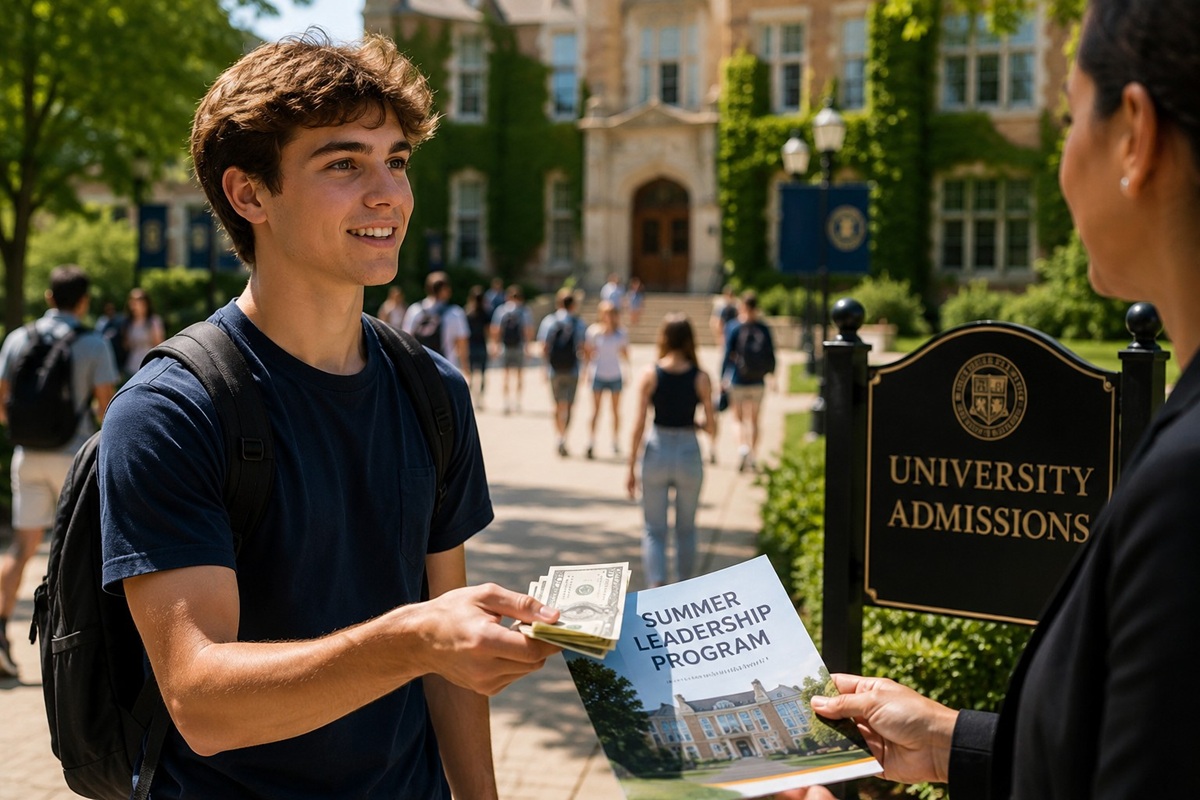
Myth 4: Expensive summer programs carry significant admissions weight
Many prestigious universities host summer programs for high schoolers. While these programs can be wonderful learning experiences, attending them does not give applicants a special advantage in the admissions process. Admissions readers distinguish between highly selective, free, merit-based summer programs and pay-to-attend programs where the primary requirement is the ability to pay tuition.
Myth 5: Leadership requires a “President” title
Leadership is about action, responsibility, and impact, not a formal title. An applicant who serves as an active, reliable mentor to younger team members is a far stronger leader than a club president who does little more than stand in photos.
Myth 6: Part-time jobs do not count as extracurriculars
This is one of the most damaging myths for working-class students. In reality, holding a part-time job is one of the most respected activities on an application. Working in fast food, retail, or manual labor demonstrates reliability, maturity, and real-world responsibility—qualities that colleges value highly. For details on detailing employment, refer to Do Jobs Count as Extracurricular Activities?.
Myth 7: Family responsibilities do not belong on college applications
Many students do not realize that cooking meals, translating for parents, caring for younger siblings, or helping run a family business are highly valid extracurricular activities. Admissions offices at elite universities, including Yale and MIT, explicitly state that these obligations are valuable uses of time that demonstrate deep character and maturity. For candidates managing household responsibilities, a dedicated resource on How to Write About Family Responsibilities on College Applications offers tailored advice.
Myth 8: “Normal” activities cannot stand out
Students often worry that common activities like varsity sports, playing in the school band, or participating in Key Club are too ordinary to be impressive. However, any common activity can become standout if the student shows unusual dedication, takes on significant responsibility, or makes a major, measurable impact within that group.
How Different Types of Colleges May Weigh Extracurriculars
Higher education is not a monolith, and different institutions evaluate extracurricular activities in very different ways. Understanding these differences helps students build a balanced list and align their application strategy with each school’s evaluation process.
Admissions Weight by College Type
The table below details how various types of institutions prioritize extracurricular activities compared to academic metrics during the evaluation process:
| College Category | Importance of Extracurriculars | Key Evaluation Focus | Strategic Advice for Applicants |
|---|---|---|---|
| Highly Selective Private Colleges | Very High | Looks for highly distinctive talents, unique initiatives, personal character, and residential community fit. | Focus on deep commitment, local impact, and genuine self-expression. |
| Selective Public Universities | Moderate | Prioritizes state residency, choice of major, and academic preparation. | Align activities with the intended major; maintain high academic standards. |
| Less Selective/Regional Colleges | Low | Focuses on satisfying basic academic requirements (GPA and test thresholds). | Ensure grades meet admission thresholds; use activities to qualify for merit scholarships. |
| Honors Colleges & Cohort Programs | High | Evaluates leadership potential, intellectual curiosity, and community engagement. | Highlight independent academic projects, volunteer work, and leadership roles. |
| Specialized/Artistic Programs | Critical | Directly assesses technical talent through portfolios, auditions, or athletic evaluations. | Dedicate significant time to refining technical skills and preparing audition materials. |
These variations show that students should not assume every college reads activities the same way. An applicant’s strategy should change based on the specific admission practices of the colleges on their list.
How Activities Connect to Intended Major
A common question is whether a student’s extracurricular activities must align with their intended college major. The answer depends entirely on the competitiveness of the major and the type of university the student is applying to.
When Major-Aligned Activities Matter Most
For highly competitive, direct-admit pre-professional programs, showing relevant extracurricular experience is highly beneficial and often expected. These competitive pathways include:
- Engineering & Computer Science: Showing hands-on engagement through robotics teams, coding projects, hackathons, or independent building.
- Business & Finance: Participating in DECA, school investment clubs, running a small business, or managing inventory for a retail job.
- Nursing & Pre-Med Pathways: Showing consistency in clinical volunteering, shadowing medical professionals, working as an EMT, or participating in health science clubs.
- Creative Arts & Journalism: Building a strong portfolio, writing for local publications, or editing the school newspaper.
When Unrelated Activities Carry Strong Value
For liberal arts majors, humanities, and general sciences, colleges do not expect a student’s activities to align perfectly with their major. Admissions committees are looking for interesting, multi-dimensional human beings who will contribute to a vibrant residential community. Furthermore, the valuable skills developed in an activity can easily transcend the activity itself. For example:
- A future engineer who works 20 hours a week as a shift manager at a local restaurant is developing valuable leadership, communication, and crisis-management skills.
- A future nursing student who spends their afternoons caring for younger siblings is demonstrating deep empathy, reliability, and responsibility.
- A future business major who runs a niche local podcast is showing creative initiative, public speaking skills, and marketing experience.
Colleges admit whole people, not just singular majors. A thoughtful mix of major-related activities and personally meaningful hobbies is often the most compelling approach.
How to Build a Strong Extracurricular Portfolio
Building a strong extracurricular portfolio does not require spending money on expensive programs or trying to fit into a pre-made mold. Instead, students can follow a clear, practical framework to develop an authentic and impactful profile.
Step 1: Start with real-life circumstances
Students should begin by looking honestly at their daily routine, responsibilities, and existing opportunities.
- What responsibilities do they already carry at home, at work, or in their neighborhood?
- What communities are they naturally a part of?
- What resources, clubs, and opportunities are actually available at their high school and in their local area?
Step 2: Choose a few activities worth growing
Rather than joining every club available, students should select two to four pursuits that they genuinely care about and focus their energy there. These can be school clubs, hobbies, part-time jobs, or family responsibilities. The key is to choose activities where they can stay involved over multiple years and take on real responsibility.
Step 3: Move from participation to contribution
Once a student has chosen their core activities, they should focus on moving from a passive member to an active contributor. This progression often follows a natural path:
Join or Begin -> Learn the Basics -> Become Reliable -> Take Responsibility -> Lead, Improve, Create
An active contributor does not need a formal title; they simply need to look for ways to help the group succeed, organize events, or mentor newer members.
Step 4: Identify and solve real-world problems
The most impactful activities often start when a student notices a small problem in their immediate environment and takes steps to solve it.
- Does a school club need a better way to organize its meetings?
- Are younger students in the neighborhood struggling with their homework?
- Does a local animal shelter need help managing its weekend volunteers?
- Does a family business need a simple spreadsheet to track sales?
By stepping up to solve these local, real-world problems, students naturally build leadership, show initiative, and make a measurable impact.
Step 5: Document and track evidence
When it comes time to apply to college, students are often asked to describe their activities with specific details and metrics. To make this easy, students should maintain a simple digital log throughout high school to track:
- Dates, hours per week, and weeks per year spent on each activity.
- Specific roles, tasks, and responsibilities they took on.
- Measurable outcomes (e.g., number of students tutored, dollars raised, social media followers gained, or hours worked per week).
- Promotions, awards, or formal recognition received.
How to Describe Activities on Applications
The Common App activities section gives students up to ten slots to list their pursuits. However, space is highly limited: students have only 50 characters for their position title, 100 characters for the organization name, and 150 characters for the description field. Because space is so tight, students must write clear, punchy, and action-oriented descriptions. To master the mechanics of the application platform, students should review the step-by-step breakdown of How to Describe Activities on the Common App.
Side-by-Side Description Comparison
The table below shows how to rewrite common, weak descriptions into highly effective, metric-driven entries that fit the Common App character limits:
| Activity Type | Weak, Common Description (Vague & Passive) | Strong, Impact-Driven Description (Quantified & Action-Oriented) | Character Count | Why the Strong Version Works |
|---|---|---|---|---|
| School Club | Member of Key Club. We went to meetings, volunteered around the school, and helped raise money for charity. | Organized 4 food drives, recruited 18 volunteers, collected 600+ pantry items, and trained new members on event setup. | 114 characters | Uses strong action verbs, shows specific leadership, and quantifies the exact scale of impact with numbers. |
| Part-Time Job | Worked at a local restaurant as a cashier. Served customers, took orders, cleaned up, and did what my boss asked. | Cashier and shift closer working 18 hrs/wk; balanced cash register, trained 3 new hires, and managed food-safety logs. | 118 characters | Highlights reliability, specific operational responsibilities, and leadership by training others. |
| Family Duty | Took care of my younger siblings after school because my parents had to work late shifts. Cooked food and helped with homework. | Cared for 2 younger siblings 15 hrs/wk; prepared meals, supervised homework, and translated school communications for parents. | 122 characters | Legitimizes heavy family responsibility, quantifies the time commitment, and shows maturity and translation skills. |
| Personal Hobby | I have a blog where I write about local history. I enjoy research and learning about historic buildings in my town. | Founded local history blog; researched, wrote, and published 24 articles; grew audience to 1,200+ monthly readers. | 115 characters | Shows independent intellectual curiosity, creative initiative, and a measurable audience size. |
Strong Action Verbs for Application Profiles
Students should avoid weak, repetitive verbs like “helped,” “participated,” or “was responsible for.” Instead, they should start descriptions with strong, precise action verbs:
- To Show Leadership & Management: Led, coordinated, managed, organized, directed, supervised, spearheaded, trained, oversaw. * To Show Initiative & Innovation: Built, launched, created, designed, founded, developed, initiated, established, pioneered. * To Show Impact & Outcomes: Improved, increased, raised, generated, reduced, expanded, solved, strengthened. * To Show Service & Collaboration: Tutored, mentored, translated, supported, advocated, facilitated, contributed.
Activities, Essays, and Recommendations Work Together
An application is not a collection of isolated parts; it is a holistic narrative where every component should support and build upon the others. Admissions readers look for consistency and harmony across the entire file.
- The Activities List (What Was Done): The activities list provides the skeleton of the student’s out-of-class life. It answers basic, objective questions about roles, time commitments, tasks, and measurable outcomes.
- The Essays (Why It Mattered): The personal statement and supplemental essays are where students bring their activities to life. An essay should not simply repeat the achievements listed on the resume. Instead, it should dive into a specific story, sharing the student’s motivations, the challenges they faced, what they learned, and how they grew as a person.
- Recommendation Letters (How Others Saw It): Teacher and counselor recommendations provide external validation of the student’s character, work ethic, and contribution. If a student writes an essay about their passion for community service, a letter from a teacher confirming that the student is a kind, helpful leader in the classroom makes the story far more believable. To learn about recommendations, see How to Ask Teachers for Recommendation Letters.
- The Additional Information Section (Context & Clarity): The Additional Information section on the Common App is a highly useful, underutilized space. Students can use this section to explain physical, financial, or personal constraints that impacted their activities. This is the ideal place to clarify a lack of school clubs due to high school resource limitations, long daily commutes, or heavy family responsibilities.
By ensuring these different parts of the application work together, students present a clear, authentic, and highly credible profile to admissions readers.
What to Do If You Think You Have No Extracurriculars
Many students—particularly those from under-resourced schools, low-income households, or non-traditional backgrounds—look at competitive college applications and feel a sense of panic because they do not have traditional school-sponsored activities.
However, many students actually have rich, meaningful lives outside of school; they simply do not realize that their daily responsibilities count as extracurricular activities.
If a student believes they have no activities to list, they should start by taking an inventory of their typical week. They can ask themselves:
- Where does their time go after the final school bell rings? Do they go straight to a job? Do they walk home immediately to watch younger siblings, prepare dinner, or help run a family store?
- What hobbies or interests do they pursue independently? Do they spend hours coding on a laptop, drawing digital art, writing stories, playing music, or practicing fitness?
- How do they help their family or community? Do they translate official mail for their parents? Do they volunteer at their local church or help neighbors with yard work?
Once these commitments are identified, students can take practical steps to highlight and strengthen them for their applications:
- Formalize an Informal Commitment: If a student spends several hours a week helping neighborhood kids with math homework, they can organize this into a weekly tutoring group and track student improvement.
- Turn a Personal Hobby into a Public Contribution: If a student loves coding or digital art, they can build a free website for a local non-profit or design promotional flyers for school events.
- Build Metrics Around Family Support: If a student helps run a family business, they can design a spreadsheet to track sales, manage inventory, or organize customer schedules, turning a daily chore into a clear contribution.
Admissions committees do not expect every student to have a traditional, polished resume. They want to see how students spend their time, carry responsibilities, and make a positive impact within their unique world.
Common Mistakes Students Make
Even high-achieving students can make critical mistakes when presenting their extracurricular profiles. Recognizing and avoiding these common traps can significantly strengthen an applicant’s portfolio.
- Joining too many clubs without depth: Many students join a dozen different clubs in their junior or senior year to fill out their applications. Admissions readers can easily see through this strategy. Having a long list of clubs with minimal involvement or impact is far less compelling than showing deep, sustained commitment to two or three meaningful activities.
- Choosing activities only because they “look good”: Students often join activities they do not enjoy because they think it “looks good” for college. This strategy usually backfires. When a student is not genuinely interested in a pursuit, they are unlikely to take initiative, seek leadership roles, or make a meaningful impact.
- Ignoring jobs and family responsibilities: Working-class and first-generation students often leave jobs, child care, or family translation duties off their applications because they do not think these commitments “count.” This is a major missed opportunity. Admissions offices at highly selective colleges explicitly value these responsibilities as evidence of mature character, reliability, and real-world resilience.
- Confusing title with leadership: A student who lists “President” of a club but cannot describe a single concrete achievement under their leadership presents a weak profile. Admissions officers are looking for real action and positive impact, not just a title on a page.
- Exaggerating impact: Some students feel pressured to inflate their hours, titles, or accomplishments on their applications. This is incredibly risky. Admissions readers are highly experienced and can easily spot hours that do not make physical sense. Furthermore, colleges perform routine verification checks and may contact school counselors, coaches, or supervisors to confirm details. Any evidence of dishonesty is grounds for immediate rejection or rescinded admission.
- Copying elite applicants: Students often try to copy the profiles of successful applicants from completely different environments, leading to a mismatched and inauthentic application.
- Paying for prestige without doing meaningful work: Many families pay thousands of dollars for non-selective pre-college programs or internship placements, assuming the name of the host university will guarantee admission. If the student’s involvement is passive, admissions readers will assign it very little weight.
- Failing to track evidence: Waiting until senior year to recall hours, dates, metrics, and achievements often leads to vague descriptions that underrepresent the student’s actual work.
- Sacrificing academic performance unnecessarily: Spending too much time on extracurriculars at the expense of high school grades is a losing strategy, as academics remain the essential foundation of any application.
Practical Examples of Strong Activity Profiles
To see how these concepts work in practice, let’s look at five fictional but highly realistic profiles of successful applicants from diverse backgrounds.
Profile 1: The Working Student
This student balances school with significant financial contribution at home, showing deep maturity and leadership.
| Context | Activities & Hours | Impact & Metrics | Admissions Evaluation |
|---|---|---|---|
| Large, under-resourced public school. Low-income household. | Grocery Store Cashier: 18 hrs/wk. Family Childcare: 10 hrs/wk. | Promoted to shift closer; trained 3 new employees. Managed daily meals/homework for 2 siblings. | Highly Strong. Demonstrates excellent time management, reliability, and real-world leadership. The student was not expected to have traditional clubs because their time was dedicated to supporting their family. |
Profile 2: The Local Tutor
This student took an academic interest and used it to solve a local community need.
| Context | Activities & Hours | Impact & Metrics | Admissions Evaluation |
|---|---|---|---|
| Mid-sized suburban high school. | School Math Team: 3 hrs/wk. Independent Tutoring Program: 6 hrs/wk. | Coordinated free tutoring for 12 local middle schoolers; recruited 4 classmates to volunteer; tracked a 15% average score improvement. | Strong. Shows great initiative, active problem-solving, and positive community impact. The student took their academic passion and used it to help others. |
Profile 3: The Creative Builder
This student used their free time to build a self-directed personal hobby into a successful, small-scale business.
| Context | Activities & Hours | Impact & Metrics | Admissions Evaluation |
|---|---|---|---|
| Homeschooled student. | Digital Art Commissions: 15 hrs/wk. Non-Profit Graphic Design: 4 hrs/wk. | Completed 50+ custom commissions; managed business budget/scheduling. Designed materials for 3 local charities. | Memorable. Highlights entrepreneurship, self-taught technical skills, and creative initiative. This unique activity helps the applicant stand out as an interesting, self-directed person. |
Profile 4: The Future Engineer (No Fancy Research)
This student showed practical, hands-on engineering capability within a rural context.
| Context | Activities & Hours | Impact & Metrics | Admissions Evaluation |
|---|---|---|---|
| Rural public school with no local university connections. | Bicycle Repair Hobby: 8 hrs/wk. Family Farm Operations: 12 hrs/wk. | Repaired and donated 15 discarded bicycles to local families. Maintained mechanical equipment and optimized harvest logs. | Strong. Demonstrates outstanding resourcefulness and practical engineering skills. The student used their technical abilities to help their community and support their family, making the absolute most of their environment. |
Profile 5: The Family Responsibility Student
This student manages heavy household obligations while remaining engaged in a school community.
| Context | Activities & Hours | Impact & Metrics | Admissions Evaluation |
|---|---|---|---|
| Competitive public high school. First-generation college applicant. | Grandparent Caregiving: 15 hrs/wk. School Affinity Club: 3 hrs/wk. | Handled translation, medical appointments, and daily physical support for grandparent. Co-led school’s cultural affinity events. | Highly Strong. Demonstrates deep empathy, mature responsibility, and resilient citizenship. The applicant balanced a demanding home life with community participation, showing excellent character. |
A Simple Framework for Evaluating Your Own Activities
Students can use this checklist to assess the strength of their activities and identify how to develop them further:
- Have I participated in this activity for more than one year?
- Did I take on additional responsibility or leadership over time?
- Did I lead, teach, organize, build, or improve anything within this group?
- Did my work make a positive, measurable impact on others?
- Can I describe my achievements using specific numbers and metrics?
- Did I learn a meaningful technical or personal skill?
- Does this activity feel like an authentic reflection of what I care about?
Portfolio Evaluation Rubric
By using these questions, students can categorize their activities into low, medium, and high depth of involvement:
| Depth Category | Qualitative Characteristics | Typical Examples | Strategic Action Steps for Growth |
|---|---|---|---|
| Low-Depth | Short-term or passive involvement; no clear responsibility, leadership, or measurable impact. | Joining a school club but only attending monthly meetings; playing on a recreational sports team with low commitment. | Focus on taking initiative: volunteer to coordinate an event, recruit new members, or manage the club’s website. |
| Medium-Depth | Consistent involvement over multiple years; some responsibility, skill growth, and positive contribution. | Playing varsity soccer for three years; volunteering at a local animal shelter every weekend. | Look for ways to lead: mentor younger members, step up to solve a problem, or organize a new community project. |
| High-Depth | Deep, sustained commitment over several years; clear initiative, significant responsibility, measurable impact, and personal growth. | Working 20 hours a week to support family; running a successful digital art business; coordinating a local tutoring group. | Document accomplishments with specific metrics and write a clear, action-oriented description. |
Frequently Asked Questions
How many extracurriculars do I need?
There is no magic number of activities required. The Common App allows students to list up to ten, but most competitive applicants focus on three to five deeply pursued interests. Depth of commitment, leadership, and impact are far more important than a long list of superficial memberships.
Is it bad if I only have a few activities?
Not at all. A student who shows deep, sustained dedication, significant responsibility, and real impact across three activities looks far stronger than an applicant with ten low-depth club memberships.
Do hobbies count?
Yes, absolutely. If a student spends significant time learning a skill, building projects, or sharing their passion with others, it is a highly valid activity. Niche hobbies—such as hosting a board game night, repairing vintage electronics, or keeping bees—are powerful because they are authentic and help the applicant stand out.
Does a job count?
Yes. Holding a part-time job is one of the most respected activities on an application. Working in fast food, retail, or manual labor demonstrates reliability, maturity, time management, and real-world responsibility—qualities that colleges value highly.
Do family responsibilities count?
Yes, absolutely. Managing household chores, translating for parents, caring for younger siblings, or helping with a family business are all highly valid activities. Admissions offices at elite universities explicitly state that these obligations are valuable uses of time that demonstrate deep character and maturity.
Do I need leadership titles?
No, formal leadership titles are not required. Leadership is about action, responsibility, and impact, not a label on a page. Mentoring younger students, organizing group tasks, or stepping up to help when a project is struggling are all excellent examples of leadership.
Do I need national awards?
No, national awards are not necessary to build a competitive application. While national-level achievements are impressive, colleges value outsized local impact and consistent, meaningful contributions to a student’s family, school, or neighborhood just as highly.
Should all my activities match my major?
No.名 While showing some relevant experience can be helpful for highly competitive, direct-admit pre-professional majors (like engineering or business), colleges do not expect a student’s activities to align perfectly with their academic interests. A thoughtful mix of major-related pursuits and personally meaningful hobbies is often the most compelling approach.
Can unusual activities help?
Yes, absolutely. Niche, specific, and human activities—like playing in a local band, designing computer mods, or restoring old machinery—are highly memorable and help admissions readers see the applicant as a genuine, interesting individual.
Is volunteering required?
No, volunteering is not a strict requirement for admission. While community service can be a wonderful way to show empathy and values, colleges recognize that not all students have the free time or resources to volunteer. Reliable work experience or heavy family responsibilities are valued just as highly as traditional community service.
Is starting a nonprofit impressive?
Only if the organization does real, verified work and makes a genuine impact. Admissions officers are highly experienced and can easily spot “vanity” non-profits started solely to pad a resume. A student who makes a deep contribution to an existing, established organization is far more impressive than one who starts a hollow non-profit.
Extracurriculars Are Evidence, Not Decorations
In a sincere college admissions process, extracurricular activities are not decorations; they are evidence. They are proof of how a student chooses to live their life when no one is grading them, how they respond to their specific environment, how they handle real-world responsibilities, and what kind of citizen they are likely to be within a college community.
The goal of building a strong extracurricular portfolio is not to create a fictional, perfect-looking resume. The goal is to build a rich, meaningful life outside the classroom, seek out opportunities to learn and help others, and then explain those experiences on the application with honesty, clarity, and specific details.
A strong extracurricular profile does not have to be expensive, famous, perfect, or traditional. It has to be honest, specific, and meaningful.