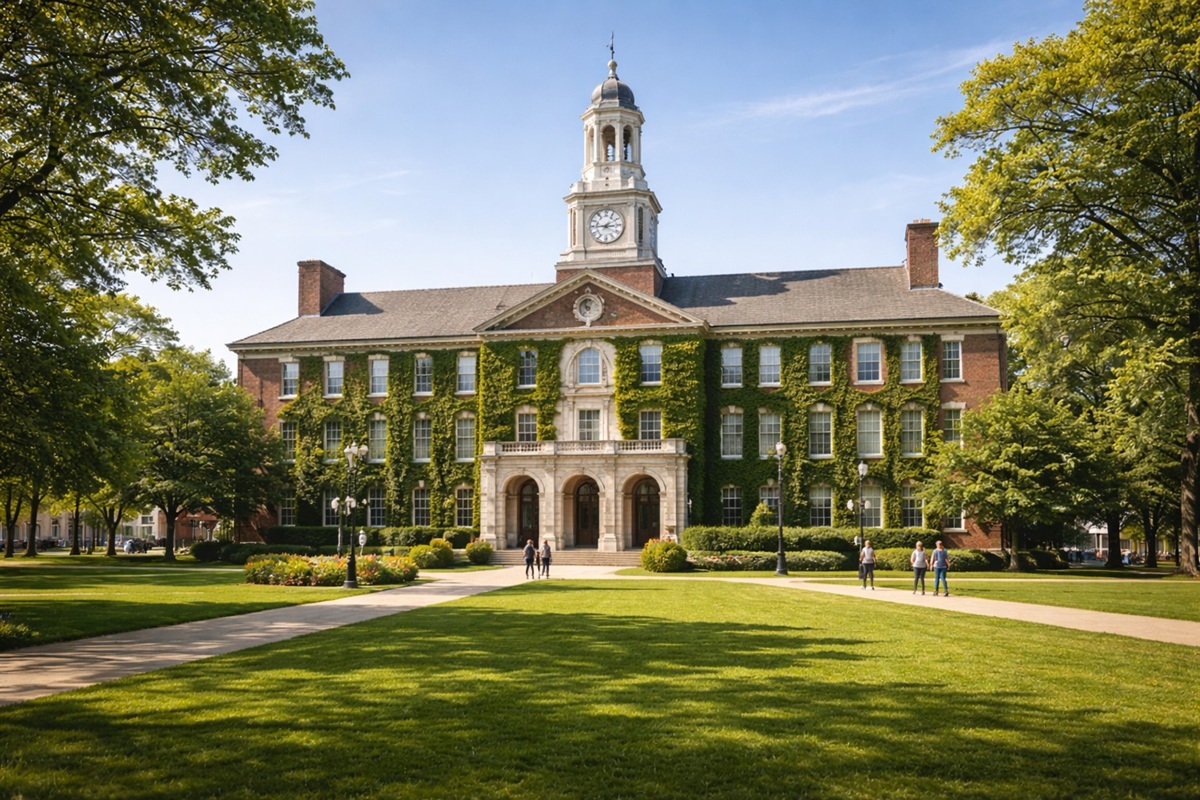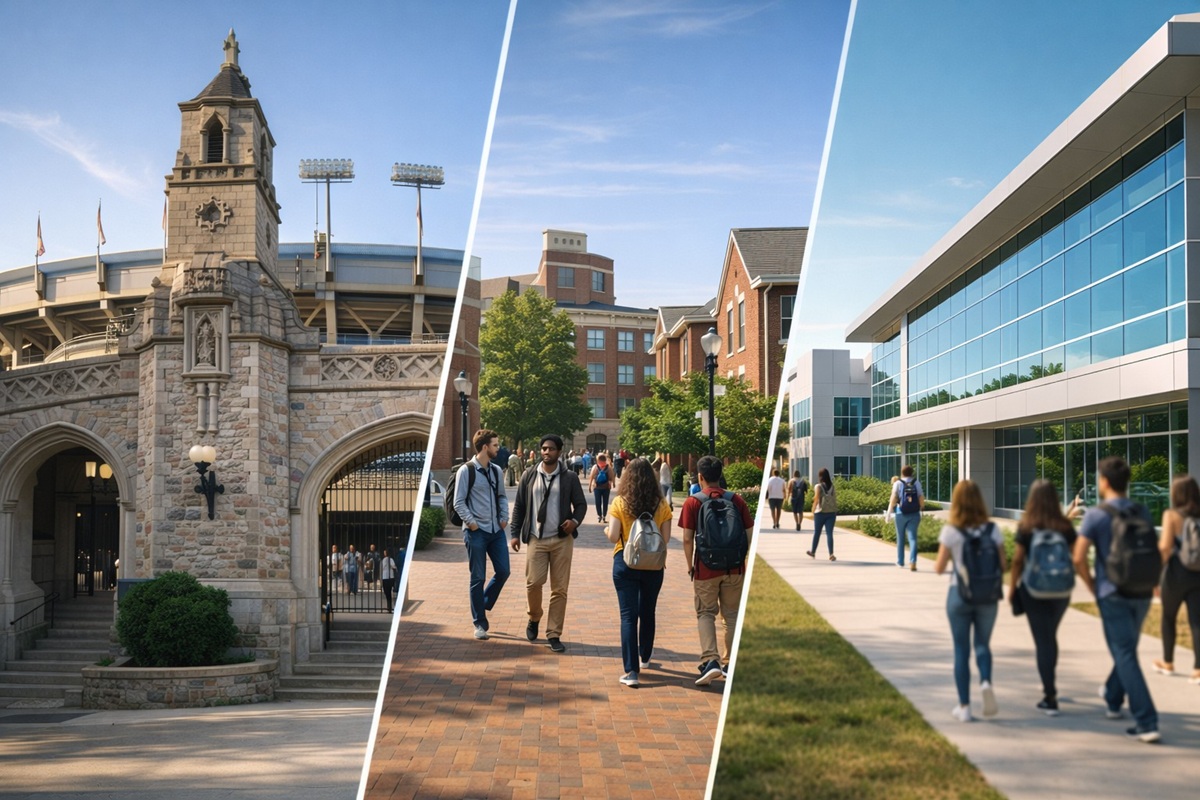
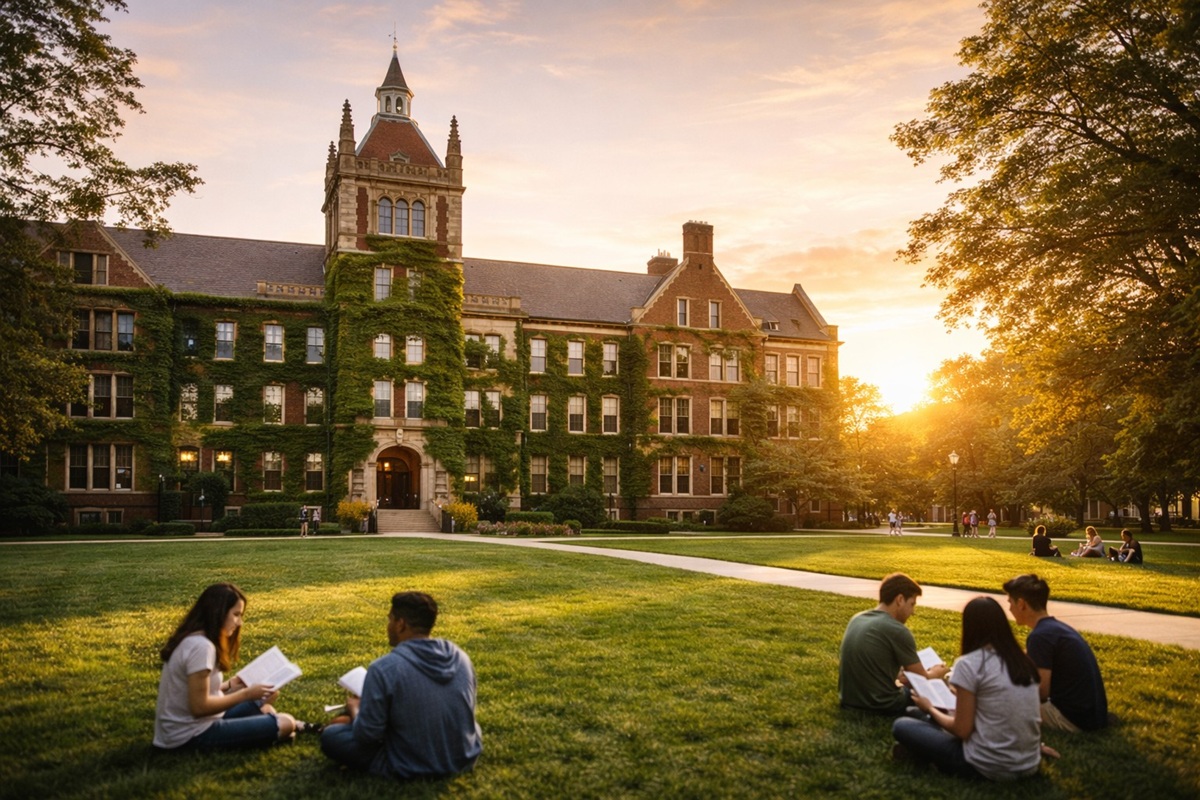
A liberal arts college is a small, teaching‑focused college where you study a broad range of subjects (humanities, social sciences, natural sciences, and math) while going deep in one major, with the goal of becoming an adaptable, analytical, and communicative thinker rather than training for a single narrow job. It is not about politics, and it is not “anti‑career”; it is a particular way of structuring your education, campus life, and faculty relationships that some students thrive in and others do not.
What is a Liberal Arts College?
“Liberal arts” refers to an educational tradition aimed at freeing your mind by teaching you to think across disciplines, ask better questions, and keep learning throughout your life, rather than promoting any political ideology. These colleges usually organize learning around four broad areas: humanities such as literature, philosophy, and languages; social sciences such as psychology, sociology, and economics; natural sciences such as biology, chemistry, and physics; and quantitative fields such as mathematics, statistics, and computer science.
Instead of training you only for one technical role, liberal arts colleges emphasize broad intellectual foundations plus depth in a chosen major, with heavy use of reading, writing, and discussion. Professional or technical programs (like nursing, engineering, or accounting) focus earlier and more tightly on specific job skills and licensing requirements.
Liberal Arts Colleges vs Other Private Colleges
Many private colleges are actually professionally oriented (business, health, engineering) and do not follow a classic liberal arts model. Liberal arts colleges tend to have structured general-education requirements that push you into multiple fields, while pre‑professional private colleges build more of your schedule around major and licensure courses from the start.
Class sizes at liberal arts colleges are typically small, with seminar discussions rather than large lectures, and faculty are hired and promoted primarily for teaching and advising undergraduates. By contrast, private research universities often organize around labs and graduate programs; professors may prioritize research output and supervise graduate teaching assistants who run many discussion sections and labs. Liberal arts colleges are usually smaller and more residential, meaning most students live on or near campus and the college aims to shape a close‑knit academic and social environment.
Snapshot: Liberal Arts vs Other Private Colleges
| Feature | Liberal Arts College | Other Private College |
|---|---|---|
| Primary Mission | Broad undergraduate education, depth in a major | Mix of undergrad, grad, and research priorities |
| Typical Size | Small enrollment, mostly undergrads | Larger, many graduate and professional students |
| Class Format | Seminars, discussion, writing‑heavy | More large lectures plus some small sections |
| Faculty Role | Teaching‑focused, direct undergrad advising | Strong research expectations, less undergrad contact in some fields |
| Majors | Fewer, centered in arts and sciences | Wider list, more pre‑professional fields |
The Curriculum: What “Breadth” Actually Means
At a liberal arts college, “breadth” usually shows up as general education or “distribution” requirements: you must take courses across several disciplines, not just in your major. That might mean, for example, a biology major taking philosophy, economics, and art history, or an English major taking statistics and psychology.
Courses are often writing‑ and discussion‑heavy, even in non‑English fields, which forces you to explain ideas clearly, argue from evidence, and respond to classmates in real time. Over four years, the curriculum is designed so that you repeatedly practice analysis, writing, and problem‑solving in different contexts, gradually layering more advanced expectations (longer papers, more complex data, independent projects). Students take classes outside their major not as “filler,” but to stretch how they think, encounter new methods (like quantitative reasoning or lab work), and make connections that don’t appear inside a single department.
Majors: Fewer Options, Deeper Engagement
Liberal arts colleges often offer a shorter list of majors than large universities, typically focused on arts and sciences rather than specialized pre‑professional programs. You may not find majors such as nursing, finance, or supply chain management; instead, you are more likely to see options like biology, economics, philosophy, sociology, or computer science.
The tradeoff is that you usually go deeper within that major: more upper‑level seminars, substantial research or thesis opportunities, and close interaction with faculty who teach the advanced courses themselves. Double majors, minors, and interdisciplinary programs (like philosophy, politics, and economics, or neuroscience that mixes biology and psychology) are common ways students blend interests when a narrowly titled major doesn’t exist. When a popular professional major isn’t offered, students often combine a liberal arts major with targeted experiences (internships, certificates, or later professional master’s programs) to reach similar careers.
Teaching Model: Faculty First, Research Second
Faculty at liberal arts colleges are hired as teacher‑scholars: they are expected to stay active in their fields but spend most of their time teaching undergraduates. You are more likely to have classes where a full professor, not a graduate student, leads lectures, labs, and seminars.
Because these institutions usually lack large graduate programs, undergraduates take on roles that would elsewhere go to grad students, such as research assistants, lab leaders, or co‑authors on smaller projects. This model contrasts with large research universities, where professors may focus on grant‑funded research, publish frequently, and delegate much day‑to‑day teaching to teaching assistants.
Skills Liberal Arts Colleges Are Designed to Build
Employers consistently rate critical thinking, problem solving, teamwork, and written and oral communication as “very important” outcomes for college graduates, and these align closely with what liberal arts curricula emphasize. Courses are structured to push you to analyze complex materials, synthesize information from multiple sources, and articulate a clear argument in writing and speech.
These general skills can feel abstract as a student, but they translate into real‑world tasks: writing clear reports and emails, understanding data in context, learning new software or regulations quickly, and working across departments. Research on employability also highlights “soft skills” like communication and human relations as key factors in graduates’ ability to secure and advance in professional roles, which liberal arts programs explicitly target. Employers often value this broad skill set more after the first job, when advancement depends less on entry‑level technical tasks and more on leadership, judgment, and adaptability.
Careers After Liberal Arts
Liberal arts graduates move into a wide variety of fields, including business, marketing, education, human resources, technology, nonprofit work, government, and more. Common job titles include roles like analyst, project manager, communication or marketing specialist, teacher, social worker, technical writer, and even web developer or data‑oriented positions for those who built quantitative skills.
Because the education is broad, career paths often look nonlinear: a philosophy major might enter consulting, then pivot to product management; a biology major might move into healthcare administration instead of lab research. Graduate school is a typical next step for students headed into law, medicine, research, or specialized professional roles, with the liberal arts degree serving as the academic foundation. Studies of liberal arts alumni show good overall employability, while also revealing that some feel underprepared in specific areas like advanced quantitative skills, which they then build on the job or through further study.
Early salary data can make liberal arts look weaker than technical or business programs, because entry‑level pay is often higher in tightly defined professional roles. However, longitudinal analyses and employer surveys suggest that liberal arts skill sets remain valuable for promotion and role changes, contributing to career resilience over time.
Are Liberal Arts Colleges Worth It?
Liberal arts colleges are often private and charge high sticker prices, but many use financial aid and discounts heavily, so what families actually pay (net price) may be much lower. These colleges sometimes deploy substantial need‑based and merit aid to attract students, particularly when they are competing with public universities and other privates.
The risk is that financial strength varies widely: some small colleges have modest endowments and depend heavily on tuition, making them vulnerable to enrollment drops and economic shocks. Recent years have seen a noticeable number of small private colleges—including several liberal arts institutions—close or merge because of financial strain, especially in regions like New England where demographic pressures are intense. This means “fit” must be evaluated alongside institutional stability; paying a high net price for a fragile college is more dangerous than paying it for a well‑resourced one.
Who Thrives at a Liberal Arts College?
Students who enjoy discussion, reading, and writing; who like getting to know professors; and who are curious about more than one subject tend to thrive in liberal arts environments. These colleges particularly suit students who want to explore different academic directions before committing to a major, or who value community, mentorship, and a more intimate campus culture.
Students may struggle if they are already firmly locked into a narrow professional goal that requires specific undergraduate credentials (for example, certain health or technical licenses) and the college does not offer the needed major. Others may prefer a big, anonymous setting with large sports scenes, extensive social options, or highly specialized majors that small colleges cannot match. Students who strongly dislike writing or discussion‑based learning, or who want a purely technical training environment, may find the liberal arts model frustrating rather than energizing.
Common Myths About Liberal Arts Colleges
“You won’t get a job” is a myth; liberal arts graduates do obtain jobs across business, nonprofit, tech, and public sectors, though the first position may not always map neatly onto the major title. “It’s just theory” ignores how many programs now integrate internships, undergraduate research, project‑based learning, and community engagement to connect classroom work with practical experience.
“It’s for rich kids” oversimplifies a complex reality: while liberal arts colleges often enroll higher‑income students overall, many also provide significant aid and discounts, especially to fill classes. “It’s easier than other colleges” is misleading; seminar‑style liberal arts programs can be demanding in reading load, writing volume, and expectations for class participation and independent thinking, even if they lack large lecture‑exam formats.
Risks and Limitations Students Should Know
Because liberal arts colleges are small, course offerings can be limited; a specialized topic might be taught only every other year, and you may have less ability to “shop around” for different professors. Alumni networks can also be smaller and more regionally concentrated, which may matter if you want to work in a specific industry or city that favors big‑name universities.
Institutional financial vulnerability is a real concern: small tuition‑dependent colleges, including many in the liberal arts sector, are overrepresented among recent closures and abrupt shutdowns. Students should therefore look closely at indicators like enrollment trends, endowment size, debt levels, and recent financial news before committing.
Questions to Ask When Considering a Liberal Arts College
When you visit websites, talk to admissions, or tour campus, consider asking:
Advising and academics
- How is academic advising structured after the first year—do I get a dedicated faculty advisor in my major, and how many students do they advise?
- How often are required courses and popular electives offered, and how hard is it to get into them?
- How easy is it to change majors or add a second major or minor?
Internships and real‑world experience
- What proportion of students complete at least one internship, research project, or co‑op before graduation?
- Are there structured partnerships with local employers or organizations, and is there funding for unpaid internships?
Career placement and alumni outcomes
- What does the first‑destination survey show: percentage employed, in grad school, or seeking work within six months?
- Which industries and cities most graduates enter, and how active is the alumni network in those fields?
Financial sustainability and cost
- What is the average net price for students at my family’s income level, and how much do students typically borrow by graduation?
- Has the college grown or shrunk in enrollment over the past five to ten years, and what is its accreditation and bond rating status?
These questions help you see how the college turns broad skills into concrete outcomes—and whether it is likely to remain stable across your four years.
How Liberal Arts Colleges Fit into the Bigger Landscape
Liberal arts colleges make the most sense for students who want a broad, rigorous education in a close community, value discussion and writing, and are either exploring or aiming for careers where flexible thinking matters (law, business, policy, creative industries, many tech roles). They are especially powerful when combined with internships, research, and later graduate or professional training that add specific technical or licensure‑level skills.
Public universities and community colleges can be better choices for students needing lower costs, very specific technical training, or access to a wide portfolio of majors and metropolitan opportunities. You do not need to panic about return on investment, but you should connect the type of education (broad vs narrowly professional), your financial reality, and your likely path to graduate or professional training when you judge value. If you can clearly explain what a liberal arts education builds, how you’ll use campus resources, and how you’ll manage cost and next steps, then a liberal arts college can be a smart, intentional choice rather than a vague gamble.