

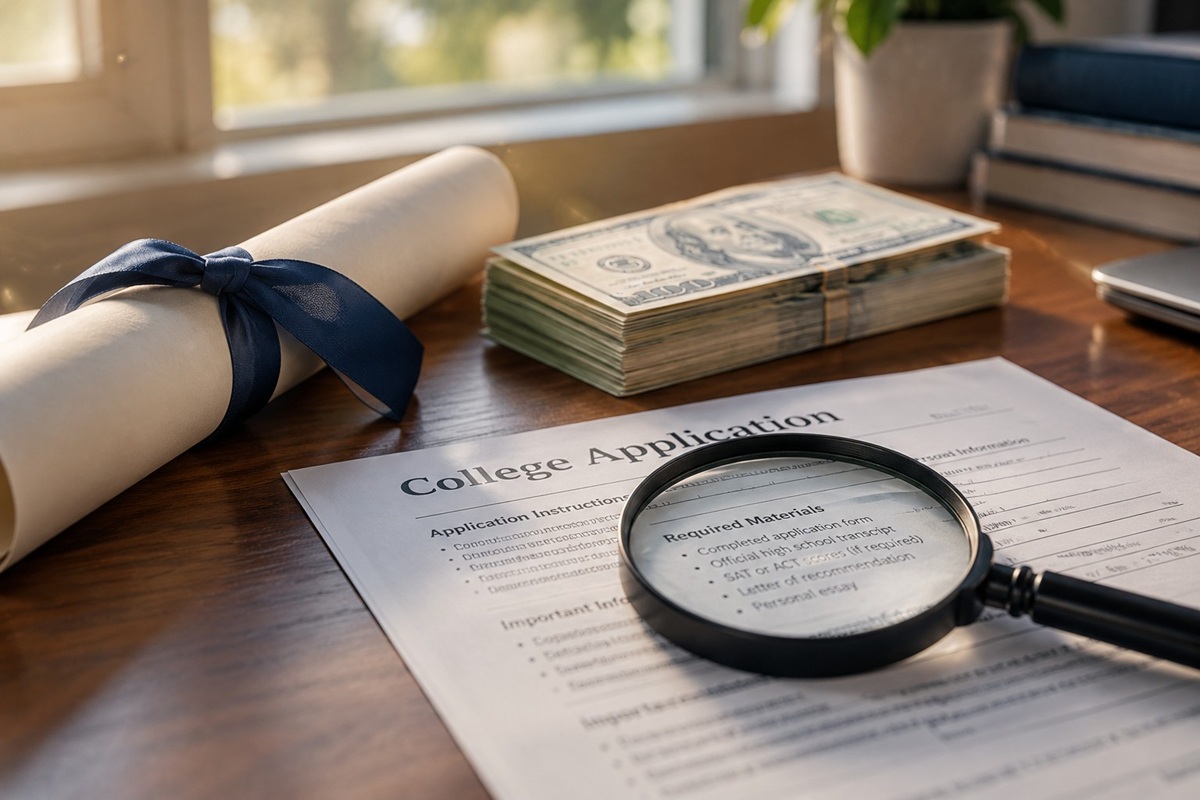
The commercialization of pre-collegiate academic enrichment has accelerated significantly over the past decade, driven by escalating competition for undergraduate admission at highly selective colleges and universities. Among these offerings, paid high school research programs—commercial research brokerages, specialized technical bootcamps, and fee-based university pre-college institutes—have emerged as a high-margin sector targeting families willing to invest substantial financial capital to enhance student application profiles.
These programs charge tuition ranging from $2,600 to upwards of $8,800 per student. They market themselves around three primary value propositions: direct mentorship from researchers at prestigious universities, guaranteed generation of a research paper or publication, and an implicit or explicit competitive advantage in selective college admissions.
A systematic review of official undergraduate admissions policies, primary program disclosures, academic publishing standards, and higher education research reveals a pronounced divergence between commercial marketing narratives and institutional evaluation realities. Highly selective universities, including Harvard, Yale, MIT, and Stanford, explicitly evaluate applicants within their local educational and socioeconomic context.
Admissions committees distinguish sharply between highly competitive, fully subsidized, merit-based research appointments—such as the Research Science Institute (RSI) or Stanford Institutes of Medicine Summer Research Program (SIMR)—and commercial pay-to-play placement services. Fee-based research brokerages are recognized by admissions readers as low-selectivity, wealth-based opportunities. Consequently, admissions officers evaluate these experiences based entirely on the student’s demonstrated independent intellectual vitality rather than the brand name of the program or the prestige of the mentor’s host institution.
This institutional stance creates a secondary structural inflation: as commercial research credentials proliferate, admissions readers increasingly discount superficial markers of research exposure, such as certificates of completion or publications in non-selective student repositories.
To differentiate genuine scholarship from purchased credentialing, admissions committees prioritize verifiable evidence of self-directed inquiry, qualitative recommendations from academic supervisors who can speak to original intellectual contributions, and performance in established national research competitions. Families who spend thousands of dollars strictly for an admissions advantage frequently experience a low return on investment, whereas students who approach research as an opportunity to build technical skills, master advanced methodologies, and explore genuine academic interests derive meaningful educational value regardless of the financial model.
Claim-Verification Matrix and Evidence Summary
To evaluate the validity of marketing claims made by commercial research providers, the following matrix compares advertised program benefits against verified primary sources, university policies, and empirical findings.
| Claim or Question Investigated | Required Evidence | Primary Source Verification | Verified Empirical Finding | Analytical Limitations |
|---|---|---|---|---|
| Do paid research programs improve selective college admission probability? | Official undergraduate admissions statements, empirical higher education studies | Harvard Admissions, Yale Admissions Guidance, MIT Admissions, College Grind Empirical Analysis | Selective universities do not assign intrinsic weight to paid research programs. Admissions readers evaluate the applicant’s independent thought and context, not the fee paid to access the experience. | Institutional statements describe evaluation philosophy; individual admissions decisions are holistic and non-public. |
| Does Pioneer Academics award transferable college credit? | Institutional agreements, official university registrar documentation | Pioneer Academics Disclosures, Oberlin College Collaboration Records | Pioneer Research Institute (PRI) participants who complete requirements earn 4 Oberlin College credits recorded on an official transcript. | Earning credit does not guarantee that a student’s eventual matriculating college will accept the transfer units toward degree requirements22. |
| Does RISE Research guarantee a 90% peer-reviewed publication rate? | Program disclosures, journal publication records, verified external audits | RISE Research Promotional Material, Academic Journal Indexing Records | RISE advertises a 90% publication success rate across 40+ journals. However, many target venues are student-specific or pay-to-publish journals rather than mainstream academic publications. | The quality, selectivity, and peer-review rigor of destination journals vary significantly across academic disciplines10. |
| Is the Journal of Emerging Investigators (JEI) free to submit and publish? | Official journal editorial guidelines, fee disclosures | Journal of Emerging Investigators (JEI) Official Guidelines & Fee Schedule | JEI charges a $35–$49 upfront submission fee to cover platform software costs, but offers automatic need-based fee waivers; it charges zero publication fees upon acceptance. | Review timelines at JEI are long (typically 6 to 12 months), requiring students to plan far in advance of college deadlines24. |
| Do premier university summer research programs charge tuition? | Official university program descriptions, funding pages | MIT Admissions (RSI, MITES, WTP), Stanford SIMR, NIH SIP Official Pages | Top-tier, highly selective research programs (RSI, MITES, SIMR, NIH SIP) are entirely free to accepted students and frequently provide living stipends. | Acceptance rates for these fully funded programs are extremely low (typically 3% to 7%)31. |
Industry Topology, Pricing Models, and Financial Economics
The commercial high school research industry comprises four distinct operating models, defined by their corporate structure, instructional format, pricing mechanics, and institutional relationships.
The financial economics of private mentorship brokerages reveal significant profit margins driven by the wage differential between client tuition and mentor compensation. Private brokerages charge families between $2,600 and $8,800 for packages that typically include 10 to 15 scheduled hours of 1-on-1 mentor interaction. Mentors—primarily graduate students and postdoctoral scholars—are hired as independent contractors and paid between $30 and $80 per hour.
Consequently, direct instructional labor costs account for only 10% to 20% of total program tuition, with the remaining revenue allocated toward digital marketing, administrative overhead, counselor referral commissions, and profit margins. Measured strictly by instructional contact time, families pay an effective rate of $250 to over $500 per direct mentor hour.
Furthermore, corporate relationships with universities are frequently misrepresented in promotional materials. While private brokerages hire mentors who are affiliated with prestigious institutions, the mentorship contracts are executed between the private company and the researcher acting in a personal capacity. The mentor’s host university provides no curriculum review, human subjects protection oversight, or institutional endorsement.
Pioneer Academics represents a notable structural exception through its formal partnership with Oberlin College, which provides independent faculty oversight and grants 4 transferable college credits on an official Oberlin transcript. However, even in accredited models, the ultimate transferability of credits depends entirely on the degree requirements of the undergraduate institution the student eventually attends.
The Academic Publishing Ecosystem and Credential Dynamics
A primary driver of demand for paid research programs is the desire to obtain a peer-reviewed publication before applying to college. Commercial programs frequently leverage this desire by promising high publication rates or offering add-on packages that assist with manuscript submission. To evaluate these promises, it is necessary to examine the tier structure of academic publishing outlets accessible to high school authors.
The academic publishing process is designed to vet scientific validity, not to provide application credentials on a commercial timeline. Legitimate peer review requires multiple rounds of critical revision and routinely takes between 6 and 12 months from manuscript submission to final publication.
For example, the Journal of Emerging Investigators (JEI)—a non-profit open-access STEM journal founded by Harvard graduate students—maintains a thorough two-stage review process where active scientists evaluate experimental design, controls, and statistical analysis. JEI charges an upfront $35–$49 fee strictly to cover manuscript management software and DOI assignment costs, offering automatic need-based waivers, and charges zero publication fees upon acceptance.
Conversely, commercial entities that guarantee fast-track publication within weeks often bypass substantive peer review or route manuscripts to affiliated fee-charging journals. Admissions readers at selective universities are familiar with these commercial publishing pipelines. When an application claims a peer-reviewed publication, admissions readers frequently examine the venue; a paper published in a pay-to-play outlet carries negligible weight and can signal a preference for purchased shortcuts over authentic intellectual work.
The Truth About Paid High School Research Programs
High school students across the country are encountering targeted social media advertisements and online forum discussions making bold claims: “Publish a research paper with an Ivy League mentor,” “Guaranteed college credit,” or *“Boost your college admissions chances by 10x.”*
As acceptance rates at selective colleges remain highly competitive, many families worry that failing to complete a formal research project will leave an application at a disadvantage. Private mentorship companies and university pre-college programs offer structured pathways to complete research—for prices ranging from $2,500 to over $8,000.
Before committing significant financial resources, students and families should understand how these programs operate, how college admissions officers actually evaluate them, and how to access high-quality research experiences without paying thousands of dollars.
Do You Need Research Experience to Get Into College?
A widespread myth in college admissions is that every competitive applicant must publish a scientific paper or complete a university laboratory internship. This is incorrect.
College admissions offices evaluate applicants holistically, looking at academic performance, course rigor, character, personal context, and sustained commitment to interests. Research is simply one of many ways to demonstrate intellectual curiosity.
Admissions offices at major universities consistently state that research experience is not a formal requirement. Admissions readers evaluate research within the context of what opportunities were genuinely available to the student. An applicant who works a part-time job to support their family, leads a local school club, or completes a self-directed coding project using free online tools demonstrates the same fundamental qualities—initiative, discipline, and problem-solving—as a student who participates in an expensive summer research program.
What Admissions Officers Say About Paid Programs
Official guidance from top university admissions offices clarifies how fee-based summer programs are evaluated:
- Harvard University: The admissions office explicitly clarifies that attending pre-college summer programs hosted on its campus is not a factor in undergraduate admissions decisions. Admissions officers emphasize that applicants should focus on deep engagement with available high school coursework, local community initiatives, or self-directed intellectual pursuits.
- Yale University: In public guidance provided via the Inside the Yale Admissions Office podcast, admissions officers state that there is no designated “summer score” in their evaluation process. They advise applicants that pursuing independent projects, working a summer job, or utilizing free local resources demonstrates equal or greater initiative than attending expensive fee-based programs.
- Massachusetts Institute of Technology (MIT): MIT Admissions explicitly warns applicants against believing that expensive pre-college programs are necessary for admission. MIT highlights its suite of free or fully subsidized summer offerings (e.g., RSI, MITES, WTP, PRIMES) and stresses that self-directed projects utilizing open datasets carry substantial value when evaluating an applicant’s intellectual vitality.
What Are Paid Research Programs Selling?
The paid research industry comprises several distinct program formats:
Private Mentorship Brokerages
Companies like Polygence, Lumiere Education, Horizon Academic, and Scholar Launch match high school students with graduate students, postdocs, or academic researchers. Tuition typically ranges from $2,600 to $8,800 for 10 to 15 hours of individual remote instruction. Students meet virtually with their mentor to write a literature review, complete a data analysis project, or draft an essay.
Distance Research Institutes with College Credit
Programs such as Pioneer Academics operate structured online research cohorts led by university professors. Pioneer costs $7,465 (plus potential lab fees up to 2%) and awards 4 Oberlin College credits upon successful completion. While the academic oversight is formal, the price point reflects this institutional affiliation.
Paid University Pre-College Programs
Many universities host summer pre-college programs on their campuses. These residential courses often cost between $5,000 and $11,000 for a few weeks of campus living and classroom instruction. While these programs offer a taste of campus life, they are almost always operated by continuing education departments, carry high acceptance rates for families who can pay, and operate independently of undergraduate admissions offices.
Deconstructing Common Marketing Claims
When evaluating paid programs, it is important to analyze marketing promises critically:
Claim: “Work with an Ivy League Professor”
The Reality: While private programs employ qualified researchers, most individual mentors are graduate students or postdoctoral fellows seeking additional income. Tenured or tenure-track professors rarely have the bandwidth to mentor high school students through commercial platforms. Furthermore, a mentor’s university affiliation does not mean their university endorses or sponsors the program. Mentors act as independent contractors, and the program is entirely separate from their host university.
Claim: “90% Publication Rate in Peer-Reviewed Journals”
The Reality: Legitimate peer-reviewed scientific journals accept a small fraction of submitted manuscripts, regardless of who writes them. Programs claiming near-certain publication rates often route student papers to internal journals, pay-to-publish web platforms, or student-only repositories that charge publishing fees and exercise minimal editorial selection. Admissions officers recognize the difference between a paper published in a recognized academic journal and one published in a commercial venue.
Claim: “Guaranteed College Admissions Advantage”
The Reality: No legitimate program can guarantee admission to a selective university. Admissions officers evaluate the quality, depth, and independence of the student’s work, not the brand name of the program they attended.
Scam vs. Poor Value vs. Legitimate Education
It is important to categorize research opportunities accurately before enrolling:
- Legitimate Paid Education: Programs that clearly disclose their costs, employ verified mentors, set realistic expectations about student outputs, and focus on teaching analytical research methods.
- Poor Value: Programs that charge several thousand dollars for very few hours of actual instruction, promise vague outcomes, or charge extra fees for basic services like paper formatting or journal submission.
- Deceptive Marketing / Scams: Organizations that guarantee admission to specific universities, fabricate mentor credentials, use university logos without permission, or exert high-pressure sales tactics to force immediate payment.
Peer Review and High School Publishing
A common goal for high school researchers is publishing a paper. Understanding how academic publishing works helps set realistic expectations:
- What is Original Research?: Original research generates new data or insights through systematic experimentation, mathematical modeling, or primary data analysis.
- What is a Literature Review?: A literature review synthesizes existing published studies on a specific topic. While writing a literature review is an excellent learning exercise, it rarely qualifies for publication in primary scientific journals.
- How Peer Review Works: Independent experts evaluate a paper’s methods, statistics, and conclusions anonymously. The process takes months, and rejection or extensive revision is standard.
Evaluating Publication Venues
If publication is a goal, focus on recognized, non-profit student outlets:
- Journal of Emerging Investigators (JEI): A non-profit, open-access STEM journal specifically for middle and high school students. Submissions undergo rigorous double-stage peer review by graduate researchers. JEI charges a $35–$49 platform fee (with full need-based waivers available) and zero publication fees.
- The Concord Review: A quarterly journal that publishes exemplary historical essays by high school students. It maintains an acceptance rate of around 5% and evaluates papers purely on literary and historical scholarship.
Analyzing Costs and Opportunity Costs
To evaluate whether a paid program makes sense for your family, calculate the cost per direct mentor hour:
Cost Per Mentor Hour = (Total Program Tuition + Fees) / (Scheduled 1-on-1 Contact Hours)
For example, a $4,000 program offering 10 hours of individual mentor meetings costs $400 per hour of instruction.
Evaluating Opportunity Costs
Every dollar and hour spent on a paid program is a resource that cannot be used elsewhere. Before enrolling, consider whether those resources could be better allocated toward:
- Purchasing a personal computer or software licenses for data analysis.
- Enrolling in advanced coursework or statistics classes at a local community college.
- Funding a self-directed community service project or independent coding initiative.
- Participating in local, regional, or national science competitions.
Free, Funded, and Low-Cost Alternatives
High school students do not need to pay tuition to gain research experience. Many premier opportunities are completely free or offer stipends.
Verified Free and Funded Research Programs
| Program Name | Operating Institution | Target Audience & Eligibility | Program Focus & Structure | Program Cost & Stipends | Official Access Link |
|---|---|---|---|---|---|
| Research Science Institute (RSI) | Center for Excellence in Education / MIT | High school juniors globally; highly selective (~5% acceptance) | 6 weeks of advanced STEM coursework and individual lab research | Free; all tuition, room, and board covered | MIT Summer Programs |
| MITES Summer | Massachusetts Institute of Technology | High school juniors; strong emphasis on underrepresented groups | 6-week residential academic enrichment in math, science, and humanities | Free; tuition, room, and board provided | MITES Official Page |
| Stanford SIMR | Stanford University School of Medicine | High school juniors and seniors (minimum age 16) | 8-week hands-on medical and biological laboratory research | Free; provides student stipends ($500–$1,500+) | Stanford SIMR Site |
| NIH High School Summer Internship (SIP) | National Institutes of Health | Graduating high school seniors (age 18+ or local commuters) | 8-week full-time biomedical research in NIH laboratories | Free; provides monthly stipend ~($2,530+) | NIH Training Programs |
| MIT PRIMES / PRIMES-USA | MIT Mathematics Department | High school sophomores and juniors nationwide | Year-long mentored research projects in pure mathematics and CS | Free distance and residential program | MIT PRIMES Site |
Independent Research Pathways (Zero Cost)
Students can design and complete impactful independent research projects using free public datasets and open-source tools:
- Genomics & Biomedical Science: Access public genetic sequencing archives through the National Center for Biotechnology Information (NCBI) and analyze data using Python or R.
- Data Science & Economics: Download public census data from the U.S. Census Bureau or economic indicators from the Federal Reserve (FRED) to build predictive models.
- Astrophysics & Environmental Science: Utilize open satellite imagery and observational data from NASA’s Open Data Portal to track environmental changes.
- Historical & Policy Analysis: Conduct archival research using digitized collections from the Library of Congress or National Archives.
Outreach Strategy: Cold Emailing University Researchers
Reaching out directly to local university professors or researchers is a traditional, cost-free way to secure lab experience or mentorship.
Guidelines for Student Outreach
- Read Their Work: Read at least one recent publication from the researcher’s lab and reference a specific finding.
- Highlight Relevant Skills: Mention specific technical skills you possess (e.g., Python, data entry, literature searching, CAD modeling).
- Keep It Concise: Limit your email to three short paragraphs.
- Be Realistic: Understand that professors receive many requests and may have safety or institutional limits regarding minors in laboratories. A polite non-response is common and should not be taken personally.
Practical Email Outreach Template
Dear Professor [Professor's Last Name],
My name is [Your Name], and I am a [Your Grade] grade student at [Your High School Name]. I recently read your paper on [Specific Title or Subject of Their Paper] and was particularly interested in [Specific Detail, Finding, or Method Mentioned in the Paper].
I am eager to deepen my knowledge in [Academic Field] and am looking for opportunities to contribute to ongoing research. I have developed foundational skills in [Mention 1–2 Practical Skills, e.g., Python data analysis, basic statistical modeling, literature synthesis] through my coursework and self-study.
If you have capacity for a high school volunteer or student assistant this semester, I would welcome the chance to assist your team with tasks such as data organization, literature reviews, or preliminary coding. I have attached my academic resume for your reference.
Thank you for your time and for your contributions to [Field of Research].
Sincerely,
[Your Name]
[Your High School]
[Your Phone Number] | [Your Email Address]
Pre-Enrollment Diagnostic Checklist & Decision Framework
Before paying tuition for any high school research program, review these diagnostic questions with a parent or guardian:
- What is the exact cost per hour of 1-on-1 mentor interaction? (See cost comparison guidelines)
- Who will my specific mentor be, and can I verify their background? (See mentor evaluation insights)
- Is the program officially operated by a university, or is it a private company using university brand names? (See university affiliation guidelines)
- What specific research output will I complete, and who owns the final work? (See research outcome guidelines)
- Does the program guarantee publication, or does it route papers to pay-to-publish journals? (See publishing ecosystem analysis)
- If college credit is awarded, will my prospective colleges accept the transfer credit? (See transfer credit considerations)
- What is the exact refund policy if the assigned mentor is a poor match? (See program policy guidelines)
- Are there additional hidden fees for lab equipment, software, or publication submissions? (See fee structure disclosures)
- How many hours per week of independent work are required outside of mentor meetings? (See program workload expectations)
- Could I accomplish a similar learning goal using free online datasets or local community resources? (See low-cost alternatives)
Pre-Enrollment Decision Framework
| Decision Category | Program Diagnostic Characteristics | Recommended Action |
|---|---|---|
| Reasonable to Consider | Transparent pricing, verified individual mentor credentials, realistic learning objectives, explicit disclaimers regarding admissions impact, and formal financial aid. | Proceed with enrollment if costs fit comfortably within family budget and align with educational goals. |
| Investigate Further | Unclear mentor assignment, vague claims regarding university affiliation, mandatory extra fees for publishing support, or unverified student outcome claims. | Request written disclosures regarding mentor contact hours, syllabus, refund terms, and total fees before paying. |
| Strong Reason to Walk Away | Guarantees of college admission, promises of fast-tracked publications in exchange for fees, high-pressure sales deadlines, or requests to misrepresent student authorship. | Decline enrollment. Seek free alternatives, independent projects, or verified merit-based programs. |
Authentic Inquiry vs. Purchased Credentials
Research is fundamentally about curiosity, critical thinking, and rigorous inquiry. It is a process of asking meaningful questions, testing hypotheses, and learning from data—not a credential that can be purchased to guarantee college admission.
While paid programs can offer structure for families who can comfortably afford them, they are never a requirement for college admissions success. By taking advantage of free public data, applying to funded merit programs, or reaching out to local mentors, students can build authentic research skills that speak for themselves.
For a broader introduction to conducting research in high school, read our foundational guide on researching in high school.