


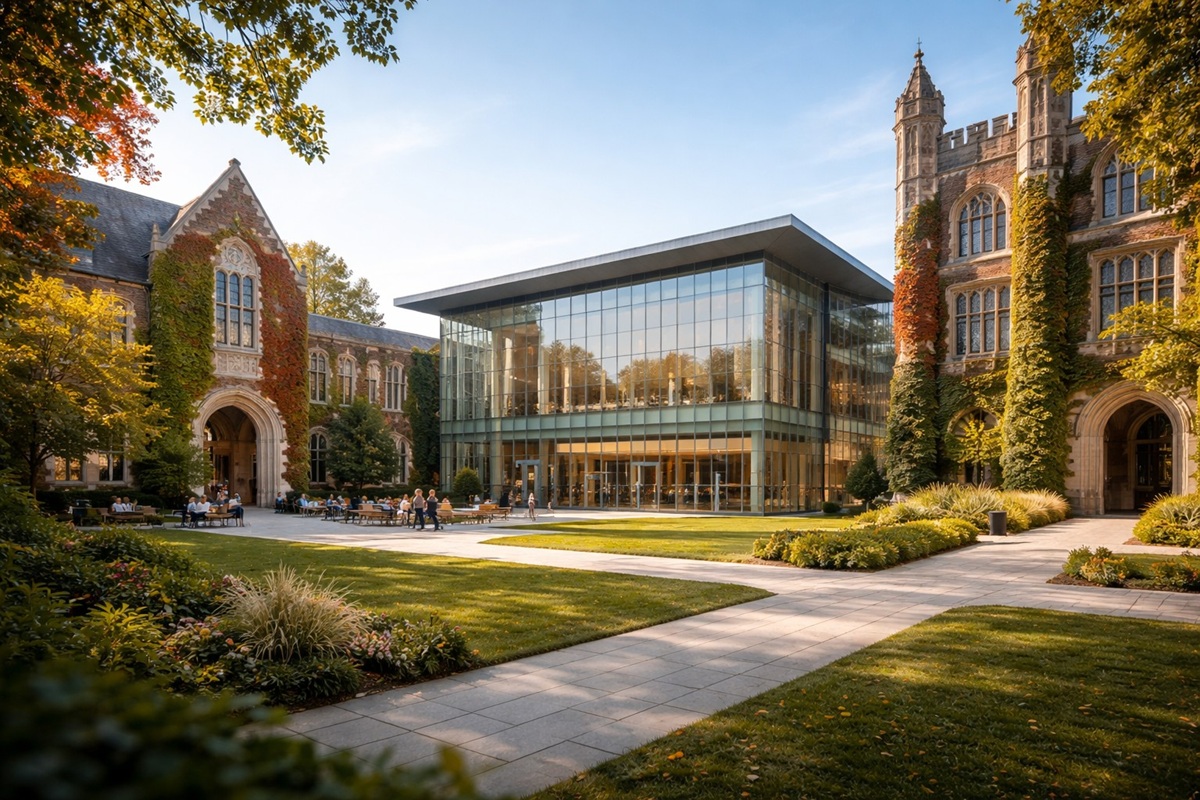
Honors colleges and honors programs are structured tracks within colleges and universities that offer smaller classes, enriched academics, and additional community and advising for high‑achieving or high‑motivation students. They are not standardized across institutions: some function like small liberal arts colleges embedded in large public universities, while others are modest sets of enhanced classes or perks layered on top of a regular degree.
For the right students, especially those at large public universities who want more structure, challenge, and support, honors can provide excellent value, but the benefits and tradeoffs vary dramatically by campus and by major. Students must therefore evaluate specific programs rather than assuming that “honors = better” in all situations.
Why Honors Programs Are Confusing
Many students first encounter the idea of an “honors college” or “honors program” through marketing materials that promise small classes, special housing, and elite‑sounding communities, often with little clarity about what actually changes day to day. Because there is no accrediting body or common standard for what counts as an honors college or program, the label can describe everything from a full residential college with its own dean and curriculum to a loose collection of honors sections and a line on the diploma.
The confusion is compounded by overlap with other concepts—such as departmental honors, liberal arts colleges, or “honors” high‑school classes—that operate very differently. This report builds a clear mental model of honors programs so students and families can decide whether a particular option matches their goals.
What Are Honors Colleges and Honors Programs?
Honors education in U.S. higher education refers to learning experiences that are intentionally broader, deeper, or more complex than standard coursework at the same institution, usually delivered in smaller, more interactive settings. The National Collegiate Honors Council (NCHC), the main professional association for honors education, emphasizes that honors is not simply “harder classes” but a distinctive learner‑directed environment with enhanced creativity, collaboration, and leadership.
Within this broad idea, institutions typically organize honors in two main formats:
- Honors colleges: stand‑alone academic units within a university (often with their own dean, budget, and curriculum) that enroll a cohort of students who complete a structured honors curriculum alongside their majors.
- Honors programs: honors tracks embedded within an existing college (for example, the College of Arts and Sciences) that provide honors courses, advising, and community but usually with fewer dedicated resources and less institutional separation.
Both models can be academically serious or fairly superficial; the label alone does not guarantee quality.
Honors Colleges vs. Honors Programs in Practice
Honors colleges are often modeled on liberal arts colleges, offering small seminars taught by senior faculty, strong undergraduate research opportunities, and distinctive general education or core curricula. As separate units they frequently have their own leadership, admissions process, and sometimes their own residence halls and co‑curricular programming.
Honors programs typically operate as structured pathways within a department or school (for example, an engineering honors academy or a college‑wide honors track) with small courses, increased expectations, and some shared experiences but less autonomy, fewer dedicated facilities, and smaller budgets than full honors colleges. Many institutions use the program model as a flexible way to offer high‑impact practices without creating a separate college.
Examples of Honors Colleges
Barrett, The Honors College at Arizona State University
Barrett at Arizona State University (ASU) is frequently cited as a prototypical honors college embedded in a large public research university. Key features include:
- A residential, four‑year honors experience that integrates with any undergraduate major across multiple ASU campuses.
- A customized honors curriculum where students earn a portion of their degree credits as honors credits through dedicated courses, honors contracts, internships, or study abroad.
- Distinctive research, internship, and travel opportunities, along with faculty mentorship and specialized projects.
- A community that “feels and functions like a small residential college” within a major research institution.
Barrett’s structure illustrates what a well‑resourced honors college can look like when it has substantial institutional backing.
Schreyer Honors College at Penn State University
Schreyer Honors College at Penn State is an honors college serving students from across Penn State’s campuses and majors. Features include:
- Small, specialized honors courses and the option to take graduate‑level classes, often culminating in an undergraduate thesis.
- Separate or specialized housing options for honors students at University Park and other campuses.
- A competitive admission process that is distinct from general Penn State admission, using separate essays, recommendations, and holistic review.
- Gateway pathways that allow high‑performing current Penn State students to apply after enrollment, provided they meet GPA and credit‑based eligibility thresholds.
Schreyer shows how an honors college can overlay a very large, multi‑campus public university while retaining selective admissions and a strong thesis requirement.
University of Michigan LSA Honors Program
The University of Michigan’s College of Literature, Science, and the Arts (LSA) runs an Honors Program rather than a separate honors college. Key attributes include:
- Honors courses and sections in a variety of disciplines, with an emphasis on inquiry‑based learning and small discussion seminars.
- Access to Honors Housing, a living‑learning option in South Quadrangle that offers additional intellectual and social programming for Honors students but is not required.
- Admission through an application process that invites a subset of admitted LSA students, reportedly enrolling roughly 10% of LSA students, though this figure comes from informal accounts such as student forums.
Michigan illustrates the program model: students remain fully within LSA but participate in a more structured curricular and residential honors community.
Structural Differences at a Glance
| Feature | Honors College (e.g., Barrett, Schreyer) | Honors Program (e.g., Michigan LSA Honors) |
|---|---|---|
| Administrative status | Separate academic unit with its own dean and budget | Program within an existing college or school |
| Curriculum | Often distinct core or general education, thesis required | Honors sections within regular curriculum, sometimes optional thesis |
| Housing | May offer dedicated honors housing or campus | Often optional learning community or themed housing |
| Resources | Dedicated staff, advising, programming, scholarships | Fewer dedicated resources; relies more on host college infrastructure |
| Identity | Marketed as a “college within a college,” strong cohort identity | Added track or layer within degree; identity can be weaker |
Why Universities Offer Honors Programs
Universities typically create honors colleges or programs to pursue several overlapping goals.
Attract and Retain High‑Achieving Students
Honors colleges and programs are widely used as recruitment tools to keep academically strong students—who might otherwise attend elite private universities or liberal arts colleges—within the public or regional university system. By offering small classes, special advising, and scholarships on top of lower in‑state tuition, public institutions can provide a compelling value proposition for high achievers.
Survey work and institutional reports suggest that honors programs also help retain these students by creating close‑knit academic communities inside large campuses, reducing the sense of anonymity that sometimes drives transfers.
Compete with Elite Private Institutions
As competition for high‑performing applicants has intensified and acceptance rates at elite privates have fallen, public universities increasingly position strong honors offerings as an alternative pathway to a rigorous, small‑cohort experience. Articles summarizing honors trends note that many families now consciously compare “state flagship + honors” to selective private options in terms of class sizes, research access, and overall educational value.
Improve Student Outcomes and Engagement
Research on honors education indicates that high‑impact practices common in honors—such as first‑year seminars, undergraduate research, and learning communities—are associated with higher levels of engagement and, in some cases, improved grades and persistence. A causal study of Oregon State University’s Honors College, for example, found that admission to the college increased course grades by about 0.10 grade points on a 4‑point scale for high‑achieving students, though first‑generation students saw negative effects concentrated in natural science courses.
Create Small Academic Environments within Large Universities
Honors structures allow large research universities to offer a “small school” experience—a cohort of peers, faculty mentorship, and focused advising—without restructuring the entire institution. Living‑learning honors communities, in particular, have been associated with stronger academic and social integration for participants, though results vary by campus and design.
Attract Scholarships, Donors, and Prestige
Honors colleges often become focal points for merit scholarships and philanthropic giving, since donors like to see recognizable, selective programs supporting ambitious students. Universities may also view successful honors units as prestige‑enhancing, signaling academic seriousness in external rankings and marketing.
What the Honors Experience Looks Like
Smaller, Discussion‑Based Classes
Across institutions, the most consistent feature of honors education is small class size and a shift toward discussion, debate, and project‑based learning instead of large lectures. Honors seminars often enroll 15–25 students and emphasize writing, critical thinking, and interdisciplinary connections, which can resemble liberal arts college classrooms.
At ASU’s Barrett, students take unique honors courses that count toward general education or major requirements but are taught in smaller sections with added depth and creative assignments. Similar patterns exist at Schreyer and Michigan Honors, where honors sections replace or supplement standard large courses.
Priority Registration and Advising
Many honors programs give students priority or early course registration, which makes it easier to secure preferred classes, avoid scheduling bottlenecks, and fit in double majors or minors. Honors students also commonly have dedicated advisors who specialize in high‑achieving students’ needs, such as national scholarship applications, undergraduate research planning, and graduate‑school preparation.
Honors Housing and Living‑Learning Communities
Honors housing, where offered, typically clusters honors students together in one or more residence halls and layers on additional programming such as faculty dinners, cultural outings, and peer‑led study groups. At Michigan, Honors Housing in South Quadrangle creates a community with social and educational events—from city excursions to arts programming—designed for Honors students, though participation in honors housing is optional and space is limited.
At Rutgers–Newark, the Honors Living‑Learning Community (HLLC) integrates social‑justice‑oriented curriculum with a residential community, using community‑engaged courses and partnerships to link classroom work with local social action. This illustrates how some honors communities build distinctive themes and missions beyond general academic enrichment.
Faculty Mentorship and Research Opportunities
Honors students often have structured access to faculty mentors and undergraduate research experiences earlier than the general population. Barrett emphasizes faculty mentorship and “unique research and internship opportunities,” while Schreyer encourages independent research and permits students to take graduate‑level courses.
More broadly, honors programs around the world have been studied as incubators for 21st‑century skills such as complex problem‑solving, collaboration, and creativity, often linked to research and project‑based work. These elements can be especially valuable for students considering graduate or professional school.
Honors Thesis or Capstone Requirements
Many honors colleges require a substantial thesis or capstone project, typically completed in the major under faculty supervision. At institutions like the University of Oregon’s Clark Honors College and Penn State’s Schreyer, this thesis is a central part of the honors identity and a key differentiator from non‑honors degrees.
Other programs treat a thesis as optional or offer non‑thesis pathways that substitute advanced seminars, capstone courses, or portfolios for a single extended research project. The presence, scope, and support for thesis work is an important point of variation when comparing programs.
Not Every Program Offers Every Benefit
It is crucial to note that not all honors programs provide all of these benefits, and some provide only a subset such as priority registration and a few honors sections without housing or thesis support. Conversely, some programs (especially well‑funded honors colleges) layer on substantial financial support, travel grants, and co‑curricular opportunities far beyond the minimum.
Benefits of Honors Programs
Increased Academic Engagement and Rigor
Small, discussion‑oriented classes with high expectations can boost intellectual engagement and foster deeper understanding of material, particularly for students who might otherwise find large lecture courses under‑stimulating. The Oregon State study suggests that admission to a selective honors college can causally increase course grades for high‑achieving students, consistent with benefits from learning in more intensive, supportive environments.
Honors programs also frequently emphasize interdisciplinary inquiry, writing, and critical analysis, skills that transfer across majors and careers. For some students, this structure guards against “coasting” and helps maintain motivation throughout college.
Access to Resources and Opportunities
Honors students commonly receive access to:
- Specialized advising and mentoring.
- Undergraduate research placements and funding.
- Study abroad or internship grants and scholarships.
- Honors‑only scholarships and sometimes annual stipends.
These resources can make it easier to pursue ambitious projects, reduce financial pressure, and build strong applications for graduate school or competitive jobs.
Social and Peer Environment
Honors cohorts bring together students with strong academic motivation, which can create a powerful peer environment for studying, collaboration, and leadership. Living‑learning communities and honors housing amplify these effects by making it more likely that students’ roommates and close friends share similar academic goals.
For first‑generation and underrepresented students, being part of an honors community can also provide a sense of belonging and validation, though careful design is needed to avoid reinforcing exclusivity.
Structured Pathway Within Large Universities
At very large public institutions, honors colleges and programs provide a structured path through the complexity: curated course sequences, clear expectations for “what it means to make the most of college,” and staff tasked with helping students navigate opportunities. This can be particularly valuable for students who prefer explicit roadmaps and checklists over designing their college experience entirely on their own.
Resume and Graduate‑School Signaling
Completing an honors curriculum, especially one that includes a substantial thesis or capstone, can signal to graduate programs and some employers that a student has sought and succeeded in advanced work. Honors designations may appear on transcripts, diplomas, or degree titles, and letters from honors faculty or directors can carry weight in competitive selection processes.
However, experts and practitioners emphasize that honors participation is only one factor among many: grades, rigor of major, internships, research, and recommendations usually matter more than the mere presence of “honors” on a resume.
Tradeoffs and Limitations
Increased Workload and Academic Pressure
By design, honors courses are typically more demanding in terms of reading, writing, and participation, and thesis or capstone requirements add significant time commitments during junior and senior years. For some students, this added rigor is energizing; for others, it can create unhealthy stress, especially when combined with competitive majors or extensive extracurricular obligations.
The Oregon State research underscores that honors is not universally beneficial: first‑generation students in that study actually saw lower grades after entering the honors college, driven largely by challenges in natural science courses. This suggests that without additional support, honors expectations can sometimes outpace the resources available to help all students succeed.
Time Tradeoffs: Internships, Work, and Flexibility
Honors requirements (e.g. extra seminars, cohort courses, service obligations, and especially a thesis) consume time that might otherwise be used for internships, paid work, or personal commitments. For students who must work many hours off‑campus or who prioritize industry experience, these opportunity costs can be significant.
Additionally, structured honors curricula can reduce scheduling flexibility, making it harder to change majors late, study abroad for long periods, or accelerate graduation without careful planning.
Variation in Program Quality
Because “honors program” and “honors college” are not regulated categories, quality and support vary widely even among similarly labeled units. Some highly resourced programs offer rich experiences comparable to strong liberal arts colleges, while others are underfunded and deliver little beyond a set of extra requirements and modest registration priorities.
Families and students sometimes discover that promised benefits, such as small classes or special opportunities, are not consistently delivered or are difficult to access in practice, especially as programs expand enrollment.
Overlap with Already Rigorous Majors
In fields like engineering, pre‑med science tracks, or heavily sequenced professional majors, the core curriculum may already be intense and prescriptive. Adding honors requirements on top of such majors can lead to overload without dramatically changing outcomes, particularly if the honors component centers on general education courses rather than deeper major‑specific engagement.
In some cases, departmental honors within the major (such as a senior thesis track in physics or history) may provide equivalent or better academic challenge with fewer additional general requirements than a college‑wide honors program.
Social and Equity Concerns
Scholars have noted that honors tracks can create “high” tracks within universities that deepen stratification if access is limited to narrowly defined academic profiles and if programs are not attentive to inclusion. While national survey data show a significant share of honors students are first‑generation, access and support vary by campus, and performance funding or prestige pressures can push institutions to prioritize already advantaged students.
Students who are not in honors may also perceive a two‑tiered campus, with resentment arising if honors students receive disproportionate resources or privileges without clear academic justification.
Why Honors Programs Vary So Much
No Standardized Definition or Accreditation
The NCHC describes honors education in terms of broad principles—broader, deeper learning; learner‑directed environments; close communities—but explicitly acknowledges that every honors program is unique in its offerings and methods. There is no external accreditation that prescribes minimum resources, curricula, or selectivity, so institutions have wide latitude in how they design and label honors units.
As a result, two “honors colleges” at different universities may differ drastically in funding, housing, advising ratios, and thesis expectations, while an “honors program” at a well‑funded flagship might outclass a nominal honors college elsewhere.
Differences in Selectivity
Selectivity varies from extremely competitive, requiring top‑of‑class GPAs, strong standardized test scores where used, extensive essays, and recommendations, to relatively open programs that admit most students who meet baseline criteria or who apply after demonstrating solid college performance.
National surveys of honors programs report median ACT scores around 29 and high school GPAs around 3.8 for many public university honors cohorts, but with substantial variation. Some institutions also reserve a share of honors seats for transfer or current students, which changes the profile of entry.
Funding and Institutional Support
Honors units funded with dedicated budgets, endowed scholarships, and staff can provide extensive programming, research funding, and intensive advising. Others operate with minimal staff and rely heavily on existing courses and resources, offering fewer distinctive opportunities.
State performance‑funding policies and institutional priorities can influence how much support is directed toward honors relative to other student success initiatives, with concerns that heavy investment in selective tracks could divert resources from broader equity goals.
Curriculum Requirements and Integration with Majors
Some honors colleges replace a large portion of general education requirements with an integrated honors core, as at Oregon’s Clark Honors College, while leaving major requirements mostly unchanged. Others, especially college‑wide honors programs, focus on honors sections of existing courses plus a capstone.
Integration with majors can range from seamless—where every department has clear honors pathways and course options—to patchy, where honors students in certain fields struggle to find enough relevant honors credits. Prospective students should examine how honors requirements interact with specific majors of interest.
Prestige Within the Institution
On some campuses, honors admission is highly coveted and widely recognized among students and faculty, while on others it is relatively invisible or seen mainly as an advising designation. Internal prestige often correlates with resources (housing, scholarships, space) and selectivity but also with how well honors integrates and collaborates with departments.
How Admission to Honors Programs Works
Common Application Pathways
Institutions typically use one or more of the following pathways:
- Direct application with initial admission Students apply to the university and the honors college simultaneously, submitting extra essays and materials; decisions may arrive together or in sequence, as at Schreyer Honors College.
- Separate honors application after general admission Many universities invite admitted students who meet certain criteria to complete an additional honors application with essays and sometimes recommendations.
- Invitation‑only processes Some honors programs identify top applicants based on their main application and invite only those to apply or accept them automatically, limiting the pool for capacity reasons.
- Post‑enrollment or “gateway” application Current students can apply after completing one or more semesters with a strong college GPA and sometimes specific prerequisite courses, as seen in Schreyer’s current‑student application and Michigan’s internal selection processes.
- Upper‑division or transfer entry Programs like Barrett offer an upper‑division entry point for students who have completed roughly half their degree and will spend at least two more years at the institution.
Typical Evaluation Criteria
While details vary, common evaluation elements include:
- Academic performance: High school GPA and course rigor, or college GPA for current students and transfers.
- Standardized tests: Some programs once used test score thresholds, though test‑optional policies have diversified practices; many now emphasize holistic review instead of strict cutoffs.
- Essays and intellectual curiosity: Honors applications almost always include additional essays designed to gauge intellectual engagement, writing ability, and fit with program values.
- Recommendations: Teacher or counselor recommendations that speak to motivation, creativity, and resilience.
- Leadership and involvement: Evidence of leadership, community service, or distinctive talents and experiences.
Barrett, for example, looks for leadership, special talents, community involvement, and unique personal achievements alongside the academic record. Schreyer uses multiple essays, recommendations, and holistic review without publishing minimum GPA or test score cutoffs, signaling selective but non‑formulaic evaluation.
Holistic and Innovative Practices
Some honors initiatives are experimenting with admissions processes that focus less on traditional metrics and more on community engagement, social action, or specific program missions. Rutgers–Newark’s Honors Living‑Learning Community, for instance, uses a community‑based curriculum and admissions model aimed at cultivating talent and social justice leadership, explicitly pushing “the boundaries of academia’s possibilities.”
More broadly, honors admissions scholarship highlights debates about which criteria best predict success in honors contexts and how to design inclusive yet challenging programs.
Honors vs. Elite Universities
Overlapping Features
Well‑resourced honors colleges at public universities aim to replicate some features associated with elite private universities such as Harvard or Stanford: small seminars, close faculty interaction, abundant research opportunities, and strong advising. Students can experience rigorous coursework and faculty mentorship while paying significantly lower tuition, particularly when in‑state rates and honors scholarships are considered.
Key Differences
However, there are important differences:
- Resources and endowments: Elite private universities often have far larger per‑student endowments, enabling more generous need‑based aid, research funding, and student services campus‑wide.
- Prestige and signaling: A degree from an Ivy League or similarly selective university carries strong global name recognition and network effects that honors participation at a regional or state university typically does not match.
- Peer group and density of high achievers: While honors cohorts gather strong students, the overall student body at elite privates is more uniformly selective, affecting classroom dynamics, alumni networks, and expectations across the institution.
- Selectivity and admissions odds: Honors colleges may be selective but generally remain more accessible than the single‑digit admit rates of top private universities.
Analysts comparing “public honors vs. private elites” caution that, although public honors programs can deliver an education equivalent to elite privates in many academic departments, differences in institutional reputation and long‑term network effects remain. The best choice depends heavily on individual finances, major, campus culture fit, and goals.
When Honors Can Be a Strong Alternative
Public honors can be especially compelling for:
- Cost‑conscious students weighing large merit packages and lower tuition against high sticker prices at elites.
- Students interested in majors where the public university’s department is nationally strong, narrowing academic differences.
- Students who value the combination of a flagship public’s scale (clubs, athletics, diversity) with the intimacy of a small honors community.
Honors is generally not a perfect substitute for elite universities in terms of brand prestige but can offer comparable day‑to‑day academic challenge at a fraction of the cost.
Who Should Consider Honors Programs
High‑Achieving Students at Large Public Universities
Students with strong academic preparation who plan to attend large public or regional universities and who want seminar‑style classes, clear expectations, and structured pathways are prime candidates for honors. Honors can mitigate the downsides of large lecture environments by providing close communities and individualized support.
Students Seeking Academic Challenge and Structure
Students who enjoy reading, writing, discussion, and big‑picture questions—and who feel restless or under‑challenged in standard classes—often thrive in honors environments that expect active participation and independent projects. The explicit expectations and milestone‑based structure (courses, capstone, service) can provide a roadmap for “making college count.”
Students Interested in Research or Graduate School
Honors experiences that emphasize undergraduate research, independent study, and a thesis are particularly valuable for students considering graduate school, law, medicine, or research‑intensive careers. These students benefit from early exposure to research methods, close relationships with faculty advisors, and substantial writing and presentation practice.
Cost‑Conscious Students Seeking High‑Value Education
For families focused on value, an honors college at a strong public university can deliver much of the academic experience of a smaller elite institution at a significantly lower net cost, especially when combined with honors or merit scholarships. Students who are willing to forgo some prestige in exchange for financial sustainability often find this trade worthwhile.
Adult Learners and Transfer Students
Adult learners and transfer students who are academically motivated can also benefit from upper‑division honors options that focus on advanced coursework and capstones without requiring a four‑year residential commitment. These pathways can recognize and build upon prior experience while providing access to honors‑level advising and opportunities in the final two years.
Who Might Not Benefit from Honors
Students Prioritizing Flexibility or Work Experience
Students who prioritize maximizing work hours, pursuing extensive off‑campus internships, or maintaining maximum schedule flexibility may find honors requirements burdensome. Rigid course sequences and thesis timelines can complicate unconventional paths such as graduating early, changing majors late, or spending multiple terms abroad.
Students in Already Intense Majors Who Prefer Balance
Students in demanding majors like engineering, nursing, or pre‑med science tracks may prefer to invest energy in mastering their core curriculum and gaining clinical or industry experience rather than layering on general‑education‑oriented honors coursework. For some, departmental honors or select advanced electives within the major provide sufficient challenge without the broader obligations of a college‑wide program.
Students Who Prefer Lower Academic Intensity
Not every capable student wants the highest available level of academic pressure. Those who value a more relaxed pace, greater time for extracurriculars, or reduced reading and writing loads may find honors expectations at odds with their preferred college experience. There is no evidence that honors status is required for long‑term success, and many outstanding outcomes come from non‑honors pathways.
Students Whose Campuses Offer Weak or Under‑Resourced Honors Options
If an institution’s honors program appears thinly supported—few dedicated courses, limited advising, scarce housing or scholarships—students may gain little from joining relative to the obligations required. In such cases, seeking challenge through strong departments, research labs, or external opportunities may be more effective.
Common Misconceptions About Honors Programs
Misconception 1: “Honors Just Means Harder Classes”
Reality: High‑quality honors education emphasizes broader, deeper, and more complex learning experiences, not simply more homework. Classes often involve greater autonomy, interdisciplinary themes, and collaborative projects rather than just increased difficulty.
Misconception 2: “Honors Is Always Better”
Reality: Honors can offer significant benefits, but only when backed by sufficient resources and aligned with a student’s goals and circumstances. In some settings, the marginal benefits over strong non‑honors pathways are small, and the tradeoffs in time and flexibility can be large.
Misconception 3: “Honors Is Required for Success”
Reality: Many students thrive academically and professionally without participating in honors; factors like major quality, grades, internships, research, networking, and personal initiative often matter more than honors labels in long‑term outcomes.
Misconception 4: “Honors Is the Same Everywhere”
Reality: Honors colleges and programs vary dramatically by selectivity, funding, curriculum, and campus culture because there is no standard definition or accrediting body. Students must evaluate specific programs rather than assuming that any “honors” option guarantees a particular experience.
Misconception 5: “Honors Is Only for Traditional High‑School Stars”
Reality: While many participants were strong high‑school students, a notable share of honors students are first‑generation or transfer students, and many programs provide post‑enrollment pathways for those who prove themselves in college. Some innovative models, like Rutgers–Newark’s HLLC, intentionally recruit for community engagement and social justice potential, not just test scores.
Decision Framework: Is an Honors Program a Good Fit?
The following framework can help students decide whether to pursue or accept an honors opportunity.
Step 1: Clarify Your Priorities
Rank the importance of the following on a personal list:
- Small, discussion‑based classes and faculty interaction.
- Academic challenge and structured expectations.
- Flexibility for work, internships, or early graduation.
- Study abroad, co‑ops, or extended off‑campus experiences.
- Cost and scholarship opportunities.
- Campus size and sense of community.
- Preparation for graduate or professional school.
Students who place high value on small classes, challenge, and structure and who are less constrained by work or caregiving responsibilities are more likely to benefit from honors.
Step 2: Investigate the Specific Program
For each honors option, systematically gather information:
- Structure: Is it an honors college or program? Separate dean? Own budget? Distinct curriculum?
- Curriculum: How many honors credits are required? Is a thesis or capstone mandatory? Are honors courses integrated with your intended major?
- Resources: What advising, research funding, housing, and scholarships are available? How many staff serve how many students?
- Selectivity and outcomes: What are typical GPA/test score ranges (if shared), and what do graduates go on to do (graduate school, jobs)?
- Student experience: What do current and former students say about workload, culture, and whether promised benefits are delivered?
Step 3: Map Requirements Against Your Major and Life Circumstances
Create a simple checklist comparing honors and non‑honors paths:
- Number of required honors courses.
- Timing and scope of thesis/capstone.
- Impact on ability to double major or add a minor.
- Compatibility with intended internships, co‑ops, or work hours.
- Implications for graduation timeline.
Students in tightly sequenced or lab‑intensive majors should pay special attention to scheduling constraints.
Step 4: Assess Cost and Value
Consider:
- Net cost (after aid) of honors option vs. alternatives, including elite private or liberal arts colleges.
- Monetary value of honors scholarships, grants, or stipends.
- Non‑monetary value of added support, community, and opportunities.
If an honors program at a public university significantly lowers debt compared to elite options while still providing strong academic opportunities, it may represent a high‑value choice.
Step 5: Decide on Participation Level
Remember that honors participation need not be all‑or‑nothing:
- Some students start in honors and later opt out if the fit is poor.
- Others join through post‑enrollment pathways after proving themselves.
- Many pursue departmental honors or intensive research within majors without joining a college‑wide program.
Students should choose the level of honors involvement that best supports their learning, well‑being, and long‑term goals rather than reflexively maximizing selectivity.
Aligning Honors with Your Goals
Honors colleges and honors programs are powerful tools universities use to create enriched academic environments and to attract and support high‑potential students, but they are highly variable in design, resources, and impact. For some students, particularly academically driven, cost‑conscious students at large publics, honors can provide an outstanding balance of rigor, community, and value.
For others, the added workload, reduced flexibility, or modest incremental benefits may not justify the tradeoffs, and equally strong outcomes are achievable through non‑honors routes built around strong majors, research, and experiential learning. The wisest approach is to treat “honors” not as an automatic upgrade but as one option among many, to be evaluated carefully in light of specific program details and personal goals.