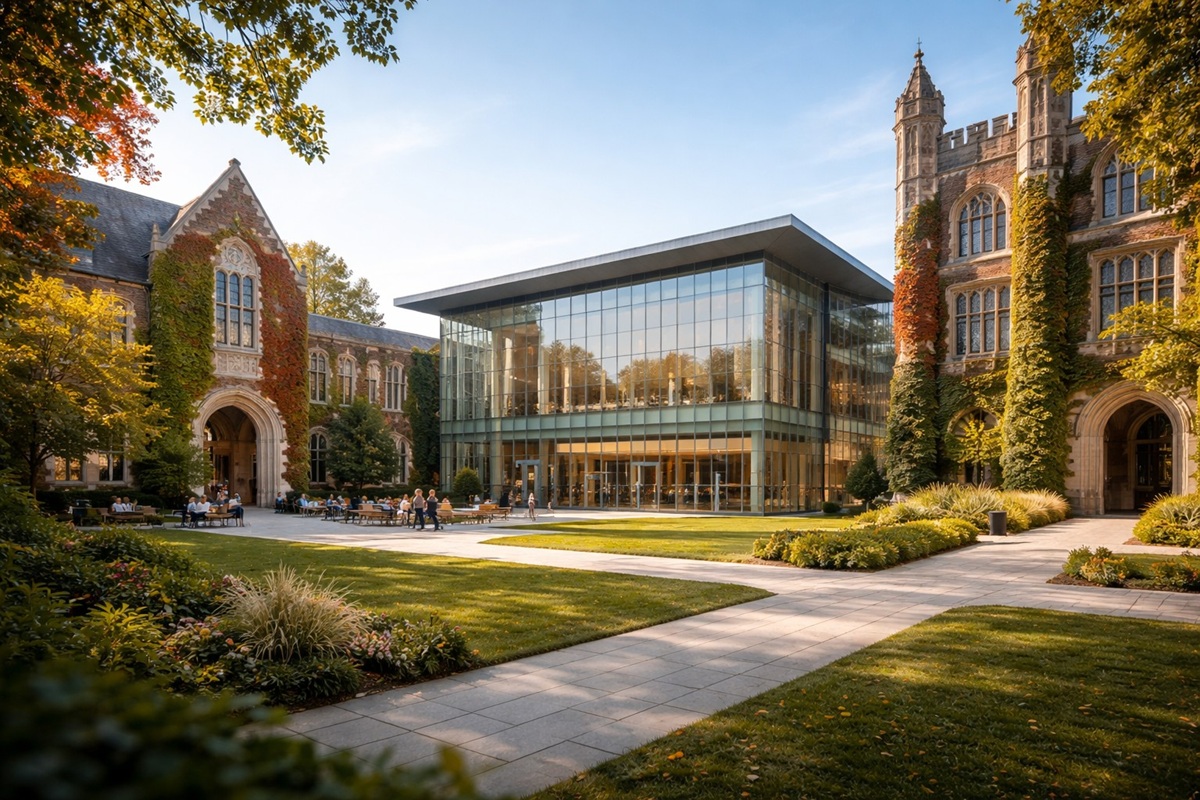



The phrase “Ivy League” is often treated as a shorthand for the “best” or “most prestigious” universities in the United States, but that belief is historically and structurally inaccurate. In reality, the Ivy League is a specific National Collegiate Athletic Association (NCAA) Division I athletic conference of eight private universities in the northeastern United States, formed in the mid‑20th century to regulate intercollegiate sports, not to certify academic superiority.
Over time, these institutions accumulated significant wealth, political and cultural influence, and academic reputations, and the athletic label “Ivy League” gradually became a powerful cultural brand associated with status and selectivity rather than its original sports meaning. Many world‑class universities—such as Stanford, MIT, the University of Chicago, and Caltech—are not in the Ivy League at all, demonstrating that “Ivy” is not a comprehensive or official category for the top universities. Understanding what the Ivy League really is (and what it is not) helps students and families move beyond simplistic prestige labels and toward better‑grounded ways of choosing colleges.
Debunking the Ivy Myth
For many students and families, especially those encountering U.S. higher education for the first time, “Ivy League” seems to mean “the eight best universities in America.” This myth is reinforced by rankings, media portrayals, and the way people casually equate “Ivy” with intelligence, wealth, and success.
In fact, the Ivy League is not an academic honor roll created by the government, accreditors, or any national academic body. It is an athletic conference whose members already had substantial prestige before the name “Ivy League” was formalized, and many non‑Ivy universities are at least as strong academically and often stronger in specific fields.
This article explains what the Ivy League actually is, why it became so prestigious, how it differs from other elite institutions, and why relying on “Is it Ivy?” is a poor strategy for making educational decisions.
What the Ivy League Actually Is
An NCAA Athletic Conference, Not an Academic Rank
The Ivy League is a collegiate athletic conference that participates in NCAA Division I competition, with its formal roots in agreements among eight Northeastern universities to regulate football and, later, other sports. In February 1954, the presidents of these institutions extended the existing Ivy Group Agreement (originally about football) to cover all intercollegiate sports, a step widely recognized as the formal founding of the Ivy League as a conference.
The stated purpose of the 1954 agreement was to promote intercollegiate athletics while ensuring that sports remained compatible with the educational mission of the universities, not to create an academic ranking or a list of “top” institutions. The League’s governance and rules concern issues such as athletic eligibility, recruiting standards, and competitive balance—similar in structure to other NCAA conferences.
The Eight Member Institutions
The eight members of the Ivy League are:
- Brown University (Providence, Rhode Island)
- Columbia University (New York City, New York)
- Cornell University (Ithaca, New York)
- Dartmouth College (Hanover, New Hampshire)
- Harvard University (Cambridge/Boston, Massachusetts)
- University of Pennsylvania (Philadelphia, Pennsylvania)
- Princeton University (Princeton, New Jersey)
- Yale University (New Haven, Connecticut)
All are private research universities located in the northeastern United States, with seven founded before the American Revolution (the “colonial colleges”) and Cornell founded in 1865 as a newer, land‑grant‑influenced institution.
Comparison to Other Athletic Conferences
Structurally, the Ivy League is comparable to other NCAA conferences such as the Big Ten Conference and the Southeastern Conference (SEC), which are also groups of universities organized primarily for intercollegiate athletics.
- The Big Ten Conference traces its origins to 1896, when several Midwestern universities formed what was then called the Intercollegiate Conference of Faculty Representatives to regulate athletics; it is now one of the oldest and wealthiest Division I conferences.
- The SEC began in 1932 when member institutions broke away from the Southern Conference; like the Ivy League and Big Ten, it is an NCAA Division I conference whose members coordinate athletic competition rather than academic standards.
The major difference is cultural: “Big Ten” and “SEC” are widely understood as sports labels, whereas “Ivy League” has taken on an additional, informal meaning in public discourse as a symbol of elite academic and social status.
Why Ivy League Schools Became Prestigious
Colonial Origins and Long Institutional Histories
Seven of the eight Ivy League schools are among the nine colonial colleges—institutions founded before the American Revolution to educate clergy, civic leaders, and professionals in the British colonies. Harvard (1636), Yale (1701), Princeton (1746), the University of Pennsylvania (chartered in 1755 following earlier academies), Columbia (1754), Brown (1764), and Dartmouth (1769) all trace their origins to this era, making them some of the oldest institutions in the United States.
These early founding dates meant that Ivy institutions had centuries to accumulate land, donations, libraries, faculty reputations, alumni networks, and political influence, long before many other universities even existed. Cornell, founded later in 1865, still entered the scene early enough to become a major research university in the 19th century, combining private funding with land‑grant characteristics.
Wealth, Endowments, and Institutional Resources
Over time, most Ivy League universities built very large endowments—investment funds whose earnings support research, financial aid, facilities, and faculty salaries. Historical advantages such as early access to wealthy donors, association with political and business elites, and prime urban or well‑developed campus locations helped these institutions grow their financial base faster than many peers.
Large endowments allow universities to offer generous aid to select students, hire prominent scholars, maintain extensive libraries and laboratories, and pursue high‑risk research, all of which reinforce their reputations for excellence. This financial strength is an important contributor to prestige but is not unique to the Ivy League; several non‑Ivy universities also have multibillion‑dollar endowments and comparable resources.
Educating Political, Economic, and Cultural Elites
Since the 18th and 19th centuries, Ivy League schools have supplied a disproportionate share of national leaders in government, business, law, and culture, further amplifying their public profile. Alumni networks extend into Congress, the judiciary, corporate boards, the media, and major cultural institutions, creating a feedback loop in which influential graduates reinforce the cachet of their alma maters.
This dynamic helped cement the idea that attending an Ivy League school is a pathway into elite circles, even though many leaders now come from a wide variety of institutions, including public universities and non‑Ivy privates.
Development of Research Infrastructure
During the late 19th and 20th centuries, Ivy League institutions invested heavily in research, graduate education, and professional schools (such as law, medicine, and business), mirroring broader trends in American higher education. These investments positioned them as centers of scientific discovery, social science research, and humanistic scholarship, which in turn attracted top faculty and graduate students.
By the time the term “Ivy League” was formally tied to an athletic conference in the 1950s, the underlying prestige of these institutions was already well established through their history, resources, and alumni influence; the label did not create their academic quality but gave a convenient name to an already powerful cluster of universities.
Ivy League vs. “Top” Schools
Elite Universities Outside the Ivy League
Many of the world’s most highly ranked and academically powerful universities are not members of the Ivy League, underscoring that “Ivy” is not a synonym for “best.” Examples frequently highlighted in global rankings and expert discussions include:
- Massachusetts Institute of Technology (MIT)
- Stanford University
- University of Chicago
- California Institute of Technology (Caltech)
Organizations that compare universities worldwide, such as Times Higher Education and QS, regularly place MIT and Stanford at or near the top of their rankings, often above several Ivy League schools. Similarly, Caltech and the University of Chicago are consistently listed among the top institutions globally, especially for STEM fields (Caltech) and social sciences, law, and economics (Chicago).
College counseling resources aimed at applicants routinely emphasize that these non‑Ivy universities can be as selective, as prestigious, and as academically rigorous as the Ivy League, even though they are not in the athletic conference.
Why “Ivy League” Is Not a Quality Seal
Because Ivy League membership is based on historical, geographic, and athletic factors, not on a standardized academic evaluation, it does not capture all top‑tier universities nor exclude all weaker ones. A university cannot “join” the Ivy League simply by achieving a certain ranking or selectivity; the conference is stable and historically defined, much like how the Big Ten or SEC are limited to particular member institutions.
Moreover, academic strength is multi‑dimensional: one university may be outstanding in engineering but only average in some humanities fields, while another excels in the arts or social sciences but has limited STEM offerings. Grouping institutions under a single prestige label obscures these differences and can mislead students who need strong programs in particular disciplines rather than a general aura of status.
Differences Within the Ivy League
Size and Enrollment
The Ivy League is far from uniform. Cornell University is the largest Ivy by enrollment, with tens of thousands of students across undergraduate, graduate, and professional programs, and a wide array of colleges including engineering, agriculture and life sciences, hotel administration, and more. By contrast, Dartmouth College is substantially smaller and is often described as having a more undergraduate‑centered, residential liberal‑arts feel, despite also being a research university with graduate programs.
Other Ivies fall between these extremes: Columbia and Penn are large, urban institutions deeply integrated into major cities, while Brown and Princeton are smaller and more residential, with reputations for particular curricular philosophies (such as Brown’s open curriculum).
Academic Emphases and Institutional Missions
Although all eight institutions are research universities, they do not share identical academic strengths or missions. Cornell’s breadth includes strong engineering, agriculture, and hotel administration programs, reflecting its partly land‑grant heritage and historic focus on practical as well as liberal education. Dartmouth emphasizes a combination of liberal‑arts undergraduate education, small classes, and a distinctive quarter‑system calendar (“D‑Plan”) that shapes student experiences differently from larger universities.
Harvard, Yale, Princeton, and Columbia are often associated with particularly strong programs in fields such as law, business, government, and the humanities, while Penn is known for strengths spanning business (Wharton), nursing, and interdisciplinary programs that link professional schools and the arts and sciences. Brown is frequently highlighted for academic flexibility and student‑driven curricula, and all Ivies maintain specialized centers and institutes that give them distinct niches.
Campus Cultures and Student Experiences
Campus culture also varies widely. Urban Ivies such as Columbia and Penn place students in dense city environments with extensive off‑campus opportunities but less geographic separation from surrounding neighborhoods. More isolated campuses like Dartmouth and Cornell have a stronger “college‑town” or rural feel, which can shape student life, traditions, and social options.
Admissions selectivity and student demographics differ across the league, as do the proportions of undergraduates to graduate students and the intensity of Greek life, athletics, and residential systems. Treating “the Ivy League” as a single, interchangeable experience hides these internal differences, which are often more relevant to a student’s day‑to‑day life than the shared “Ivy” label.
How the Misunderstanding Happened
The Rise of Rankings
Modern college rankings, especially U.S. News & World Report’s “Best Colleges,” have played a major role in reinforcing the idea that a relatively small group of highly selective universities—including the Ivy League schools—sit at the top of a national hierarchy. U.S. News first published its college rankings in 1983 using a mix of reputation surveys and quantitative measures such as resources and selectivity, and the annual ranking quickly became a dominant reference point for families and institutions.
Researchers and commentators have noted that while these rankings are influential, they are built on contestable assumptions and can encourage institutions to chase metrics that improve rank rather than educational quality. Nonetheless, colleges market their positions aggressively, and consumers often interpret small differences in rank among already‑strong institutions as meaningful quality gaps, reinforcing the notion that there is a single, ordered list of “best” schools topped by many Ivies.
Media and Pop‑Culture Representations
Film, television, and journalism frequently portray Ivy League campuses as the backdrop for stories about wealth, intellect, and power, using “Harvard,” “Yale,” or “Princeton” as shorthand for elite status. This cultural imagery emphasizes selective admissions, historical architecture, and privileged social worlds, often without acknowledging similar environments at non‑Ivy institutions.
As a result, audiences internalize the idea that “Ivy League” is a kind of elite social brand rather than an athletic conference, even if they have little knowledge of how American higher education is actually organized. Repeated exposure to this messaging makes it feel natural to equate “Ivy” with “best,” even when the underlying definition is never explicitly examined.
Social Signaling and Brand Perception
In social and professional contexts, saying that someone attended an Ivy League school often functions as a status signal, conveying assumptions about intelligence, ambition, and social capital. Employers, parents, and peers may treat the Ivy label as evidence of quality, even though many excellent institutions provide comparable or better education and outcomes.
This social signaling can affect student decision‑making: some applicants feel pressure to prioritize “Ivy” options, even when non‑Ivy alternatives may offer better academic fit, financial aid, location, or campus culture. Over time, the feedback loop between rankings, media representation, and social signaling has elevated the Ivy League brand far beyond its original athletic meaning.
“Public Ivies” and the Problem With Labels
Origin and Meaning of “Public Ivy”
The term “Public Ivy” was coined in 1985 by Richard Moll, a former Yale admissions officer, in his book Public Ivies: A Guide to America’s Best Public Undergraduate Colleges and Universities. Moll used the phrase to describe public universities that, in his judgment, offered an undergraduate experience comparable to the Ivy League, particularly in terms of academic rigor and campus environment.
Moll’s original list included institutions such as the College of William & Mary, the University of Michigan, the University of North Carolina at Chapel Hill, the University of Virginia, and the University of California system, among others. Later authors expanded the concept to 30 or more universities, illustrating that there is no single, authoritative set of “Public Ivies.”
No Formal Definition or Governing Body
Unlike the Ivy League athletic conference, which has a formal charter, governance structure, and fixed membership, “Public Ivy” is an informal label with no official membership process or accrediting body. Different guides and commentators apply the term to different sets of universities, sometimes based on rankings, sometimes on perceived selectivity or campus culture, and sometimes on more subjective impressions.
This fluidity demonstrates that prestige labels such as “Public Ivy,” “Little Ivy,” “Ivy‑plus,” or “New Ivy” are constructed, descriptive shortcuts rather than standardized classifications grounded in a consistent, external definition of academic quality.
What “Public Ivies” Reveal About Prestige
The very existence of labels like “Public Ivy” shows how strongly the Ivy League brand shapes public thinking: instead of describing top public universities on their own terms, many writers and counselors frame them as “Ivy‑like.” Yet the universities often mentioned under this label—such as Michigan, Virginia, UNC‑Chapel Hill, and UC Berkeley—have long histories, strong research profiles, and highly ranked programs in their own right.
For students, the key takeaway is that prestige terms are often analogies or marketing narratives, not official academic endorsements. A university can be excellent without being an “Ivy” or “Public Ivy,” and what matters most is how well its programs, costs, and outcomes match an individual’s goals.
Ivy League Myths vs. Realities
| Myth | Reality |
|---|---|
| The Ivy League is a list of the eight best universities in the United States. | The Ivy League is an NCAA Division I athletic conference of eight Northeastern private universities; it was not created as an academic ranking, and many top institutions are not members. |
| A university can “become Ivy League” by climbing rankings or becoming more selective. | Ivy League membership is fixed and based on historical conference agreements; universities do not join by improving rankings, just as schools do not join the Big Ten or SEC simply by getting better at sports. |
| All Ivy League schools are basically the same. | The Ivies vary significantly in size and location (urban vs. rural), academic strengths, and campus culture. |
| Non‑Ivy schools are automatically less prestigious or rigorous. | Universities such as MIT, Stanford, the University of Chicago, and Caltech are globally ranked at the very top and often exceed some Ivies in specific disciplines. |
| “Public Ivy” is an official category of top public universities. | “Public Ivy” is an informal label coined by an author; lists differ from source to source and have no governing body or standard criteria. |
| Rankings objectively measure academic quality. | Rankings like U.S. News involve subjective weights and reputation surveys; they influence perceptions but do not capture all aspects of quality. |
A Better Way to Think About College Prestige
Focus on Academic Fit and Program Strength
Instead of asking “Is it an Ivy?”, a more useful question is “Does this college offer strong programs in the areas I care about, taught in ways that fit how I learn?” Program‑level quality, teaching style, class sizes, and faculty engagement often matter more for a student’s experience than the overall institutional brand.
Students should research specific departments, look at course offerings, consider access to research or internships, and, when possible, talk with current students or alumni about their academic experiences—not just rely on the college’s overall name.
Consider Outcomes, Not Just Inputs
Selectivity (how hard it is to get in) is an input measure; it tells you more about how many people apply than about what happens after students enroll. More meaningful metrics include graduation rates, typical time to degree, job and graduate‑school outcomes, alumni networks in relevant fields, and measures of student engagement.
Many non‑Ivy institutions, including regional public universities and liberal arts colleges, have excellent records of preparing students for careers and further study, especially when students take advantage of available resources. For an individual student, a slightly less famous institution that provides strong support, smaller classes, or better alignment with interests may yield better outcomes than a more famous alternative.
Weigh Cost, Value, and Financial Fit
Prestige does not pay tuition bills. Families should compare net price (after scholarships and aid), debt levels, and likely earnings, recognizing that over‑borrowing for a name may not be wise when strong and more affordable options exist.
Some Ivy and non‑Ivy private universities offer generous need‑based aid, while many public institutions—especially in‑state flagships and regional campuses—can offer excellent value relative to cost. For first‑generation and international students in particular, understanding the balance between cost and value is more important than chasing a specific label.
Account for Environment and Personal Well‑Being
Campus size, location, climate, social culture, and support services can significantly influence a student’s success and satisfaction. A small, residential college in a rural area feels very different from a large urban campus, even if both are highly ranked.
Students should reflect on what environments help them thrive—such as access to family support, cultural communities, mental‑health resources, or particular extracurriculars—and choose institutions that match those needs, regardless of whether they are in the Ivy League.
Conclusion
The Ivy League began as an athletic alliance among eight historically influential Northeastern universities; it is not a government‑endorsed list of the “best” schools nor a guarantee of superior education in every field. Its member institutions became prestigious over centuries through early founding, accumulated wealth, research development, and connections to political and economic elites, and the Ivy label later evolved into a powerful cultural brand that often overshadows its athletic origins.
Understanding these realities allows students and families—especially those new to the U.S. system—to see “Ivy League” as one historically rooted cluster of universities among many strong options, rather than as a magical seal of quality. By focusing on academic fit, program strength, outcomes, cost, and personal well‑being instead of prestige labels, applicants can make more rational and empowering college decisions in line with their own goals.